The Chicken Pox Saga
Preparing for my move to Thailand involved getting all my travel vaccinations. Most were just boosters, like the flu, COVID-19, and tetanus, but a few were new: rabies, Japanese encephalitis, and typhoid, to name a few. All in all, I received about seven or eight vaccinations. All were administered by a shot, except for the typhoid vaccine, which was a series of pills.
After thanking the pharmacist, I was warned that I might develop a reaction to the typhoid vaccine, which could include rashes that look like tiny red bumps. He assured me it was nothing to worry about, but if I had any issues, I should go to the hospital.
As predicted, a few days later, I developed tiny red bumps, particularly on my arms and legs. They were not a cause for concern and disappeared a few days after I finished the regimen. With that behind me, I went about my life, getting ready for the journey of a lifetime.
A few days after arriving in Don Mueang, I ordered dinner from a new place, excited to try new foods. I took a bite and couldn’t quite place it, but something tasted off. I just figured it was a new spice I hadn’t tried before. Later that evening, I started feeling a little unwell and decided to go to bed early.
When I woke up the next morning, disaster struck. I was covered in spots. They didn’t hurt or itch; they were just there, and they were everywhere. Since I had to go to work the next day, I needed to figure out what they were and what I could do about them, and whether or not they were contagious. Based on my experience with the typhoid vaccine, I was leaning toward the idea that I had contracted a case of typhoid from my dinner.
Like any good American, the first thing I did was panic about how much a doctor’s visit would cost. After calming myself down, I pulled up my “big boy undies,” made my morning coffee, and contemplated my options.
To Go or Not to Go
My first option was to visit a local pharmacist. In Thailand, pharmacists often act as local doctors, which makes it a viable choice. They are knowledgeable about their business and what they prescribe. However, I felt I needed a doctor, especially if what I had was contagious. So, I tabled that option.
My second option was to go to the hospital, but which one? I had no idea which was close or if my insurance would cover it. My American “spidey-senses” told me this was the worst option. Hospitals are expensive, and all I really needed was for someone to confirm my suspicion that the rash was from the typhoid vaccine and nothing to worry about.
That left my third option: find an online doctor who could diagnose the issue, confirm my suspicions, and get me on my way. I chose this route and immediately started searching online.
Five minutes later, I was on a video call with a doctor from an urgent care clinic in Bangkok. I showed him the bumps and explained what I thought the problem was. He sat quietly for a moment, scribbled some notes, and then delivered his diagnosis: chicken pox.
Chicken pox? I was not prepared for that. I told him I had already had chicken pox as a child and that the likelihood of contracting it again was slim. He explained that it could come back at any age and that I needed to go to a hospital because his clinic wasn’t equipped to handle my case.
I thanked him for his time and resigned myself to the uncomfortable truth that I was going to the hospital. Like any American going through the grieving process of having to go to the hospital, I decided to ignore it. I called home and was immediately chastised for not taking the situation seriously. After several minutes of pleading and begging, I moved from the bargaining phase to acceptance. I called my coordinator to explain what was going on. She told me the closest option was the Royal Thai Air Force Hospital, which has excellent doctors and service. Another option was one of the international hospitals in Bangkok. I checked my insurance policy, which recommended Bumrungrad International Hospital. As an American, I knew that if I didn’t follow the insurance company’s recommendation, I’d pay full price, which would mean going broke before getting my first paycheck.
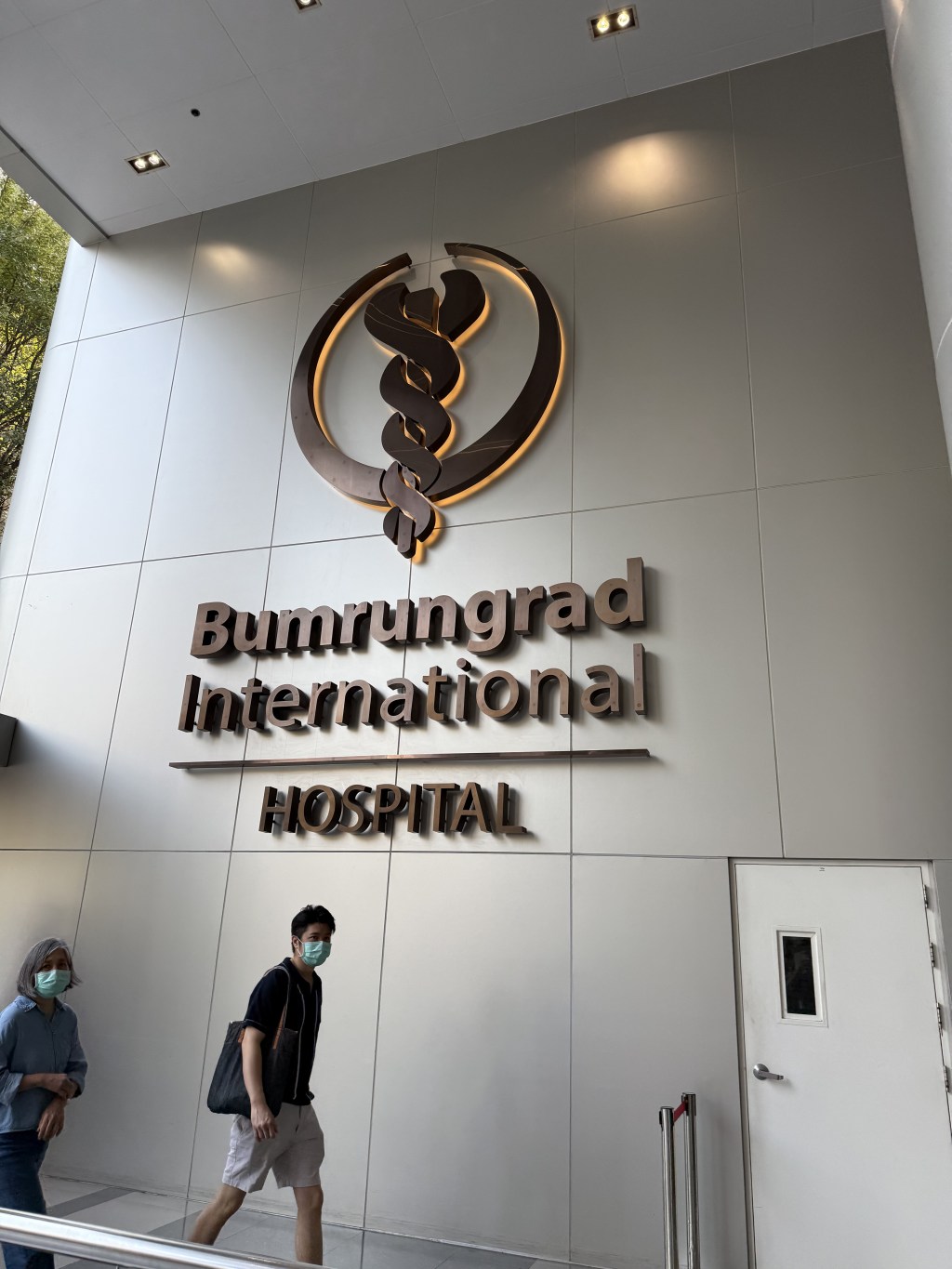
I thanked my coordinator for the recommendation, called a taxi, and headed to Bumrungrad. On the way, I took a moment to check out the hospital’s website. It was warm and inviting and provided a lot of useful information, but nothing could have prepared me for what it was like to arrive.
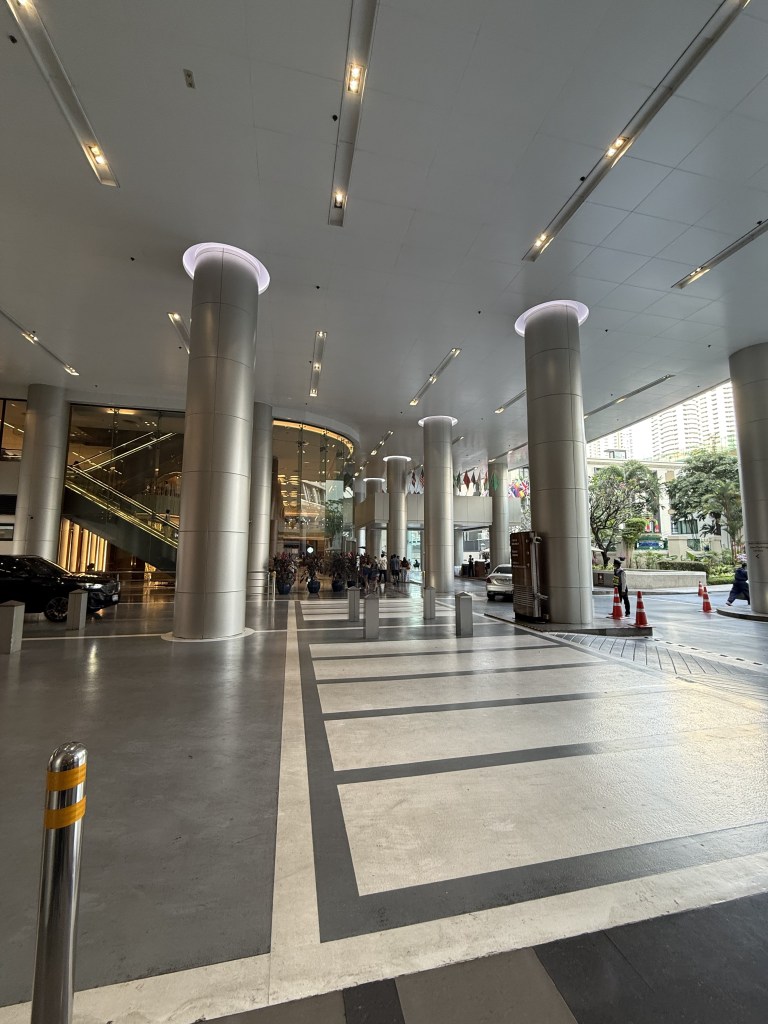
Walking into the front door felt like stepping into the lobby of a five-star resort and spa rather than a hospital. It was calm, open, and no one appeared to be stressed, angry, or volatile. My internal alarm bells went off. What was happening here?
The concierge asked if they could help me. I explained what I needed, and they responded in English, telling me I needed to go to the second floor. I gave them a wai, which they politely returned.
On the second floor, I spoke with registration, which was easy and efficient. I was given an ID card that I would use for all my transactions with the hospital. The registration clerk advised me that two doctors were available to see me right away: a dermatologist and an infectious disease doctor. I asked to see the infectious disease doctor, and he winked at me and said, “Are you sure you wouldn’t rather see the dermatologist?”
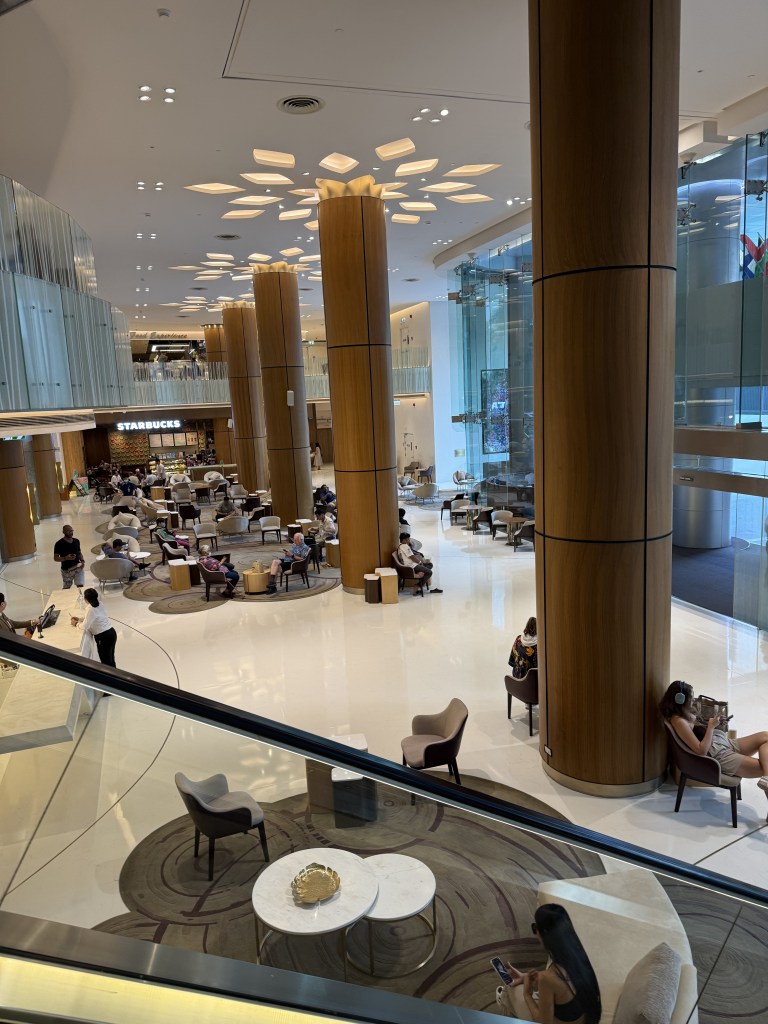

I’ve been around long enough to know that when someone asks a question like that, it means seeing the dermatologist was probably in my best interest. So, I deferred to his judgment and said, “Yes, I would love to see the dermatologist, please.” He smiled and pointed the way. The doctor’s area was efficient, clean, and still felt more like a five-star resort than a medical facility.
I checked in and had a seat. At this point, I was so used to the American medical procedure that I forgot I hadn’t seen a nurse to take my vitals or been shuffled to a communal waiting area. Instead, a soothing voice called me to the counter, took my card, and directed me to a triage area. A nurse took my vitals, looked at the bumps, proclaimed they were not chicken pox, and walked me directly into the doctor’s office.
I couldn’t believe this was the actual doctor sitting in front of me. This wasn’t how doctors at hospitals behaved. In the United States, you go to the hospital, but the doctor comes to you, not the other way around. Yet, here I was. The doctor had her medical degrees and certifications hanging on the wall behind her desk, books on shelves, and a computer that looked like something straight out of the 23rd century.
“Chicken pox, eh?” the doctor asked me.
“Yeah, that’s what the urgent care doctor told me this morning,” I replied.
She got up from behind her desk and said, “Alright, let’s have a look. Take your shirt off, please.”
After examining my bumps, she looked at me and said, “No, these are not chicken pox. They look like bug bites or infected hair follicles.”
She sat down at her desk, and I explained my journey and what I thought had happened. She nodded, took everything into consideration, and said, “It’s not likely. It’s not impossible, but the bumps don’t behave like a typhoid rash. Here’s what we’ll do: I’m going to prescribe an oral steroid for the next week, an antibiotic cream, and a moisturizer. I don’t need to tell you that your hair follicles look angry. If things don’t clear up in a few days, email me and we’ll re-examine things.”
Once again, my American brain kicked in, and I realized I had no idea how I was supposed to pick up my medicine. Would she hand me prescriptions? How did this work? The doctor must have read the look on my face and said, “I’ve already sent your prescriptions to the pharmacy. You’ll pick them up at the window on your way out of the office.”
I was already blown away. The pharmacy was in the doctor’s office? What kind of Star Trek universe had I landed in? The doctor thanked me and walked me to the receptionist’s desk. They had a brief exchange in Thai. I gave the doctor a wai, and she returned to her office.
Now, I braced myself to battle with the receptionist over the cost. She looked at me, smiled sadly, and said, “I’m sorry, this is going to be a little expensive. How do you intend to pay?”
I handed her a copy of my insurance policy and my credit card. “I’ll pay with my insurance and cover any copays, deductibles, or other expenses not covered with this.”
The receptionist read over my policy and said, “You’ll need to pay up front and then submit the paperwork for reimbursement. That’s standard for international medical insurance. May I run the balance on your card?”
I nodded. She pulled out her calculator, smiled sadly again, and gave me the total: 4,500 Baht, or about $140-150 USD.
“What?” I was shocked.
“I’m so sorry, I know that’s expensive.”
“Where do I go to pay for my medicine?”
“This is for your whole visit, including your medicine.”
“I don’t need to go pay the pharmacy separately?”
“No, receive payments in the pharmacy. I do.”
“Oh, well then… please run my card.”
The relief on my face must have been apparent because she smiled back at me. I got my card back, and then she handed me a sack and said, “Here’s your receipt and your medicine. Do you need us to call a taxi for your return trip home?”
“Wait, my medicine? Don’t I have to go to the pharmacy?”
“Normally, you’d walk over to that window by the door, and they would hand it to you, but they had your medicine ready before you even got here.”
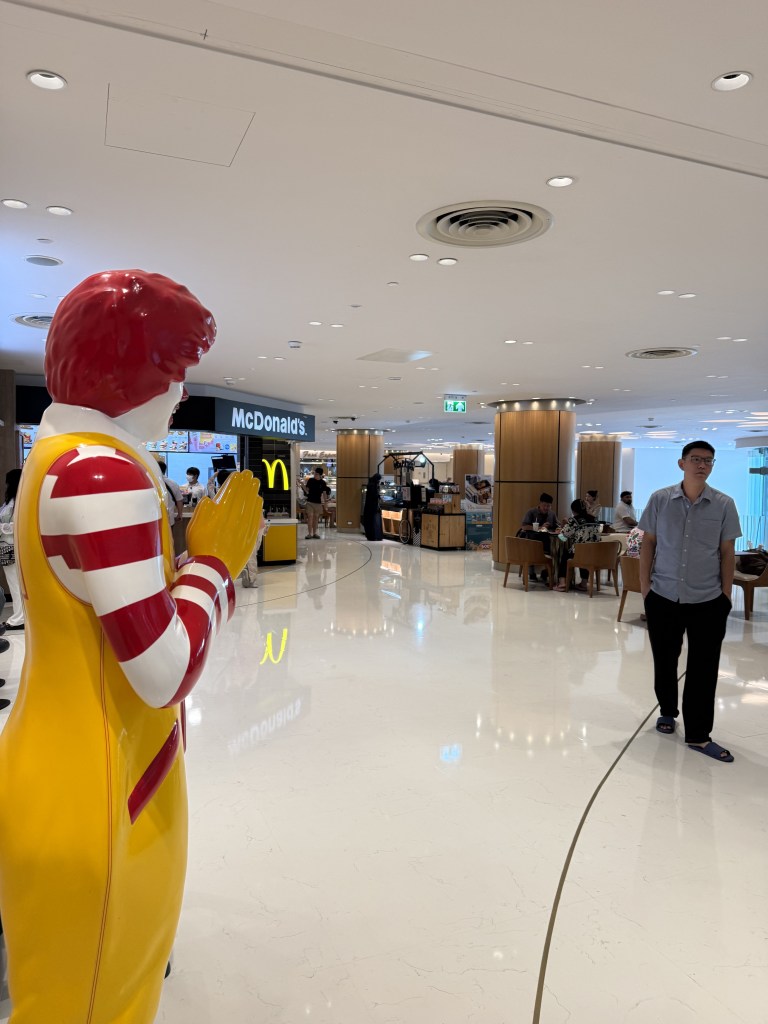
“Oh, that’s amazing, thank you.” I gave the receptionist a wai, then looked at the man behind the pharmacy window and gave him one, too. He returned the gesture. I told the receptionist I could get a ride myself, but I wanted to get something to eat before I left.
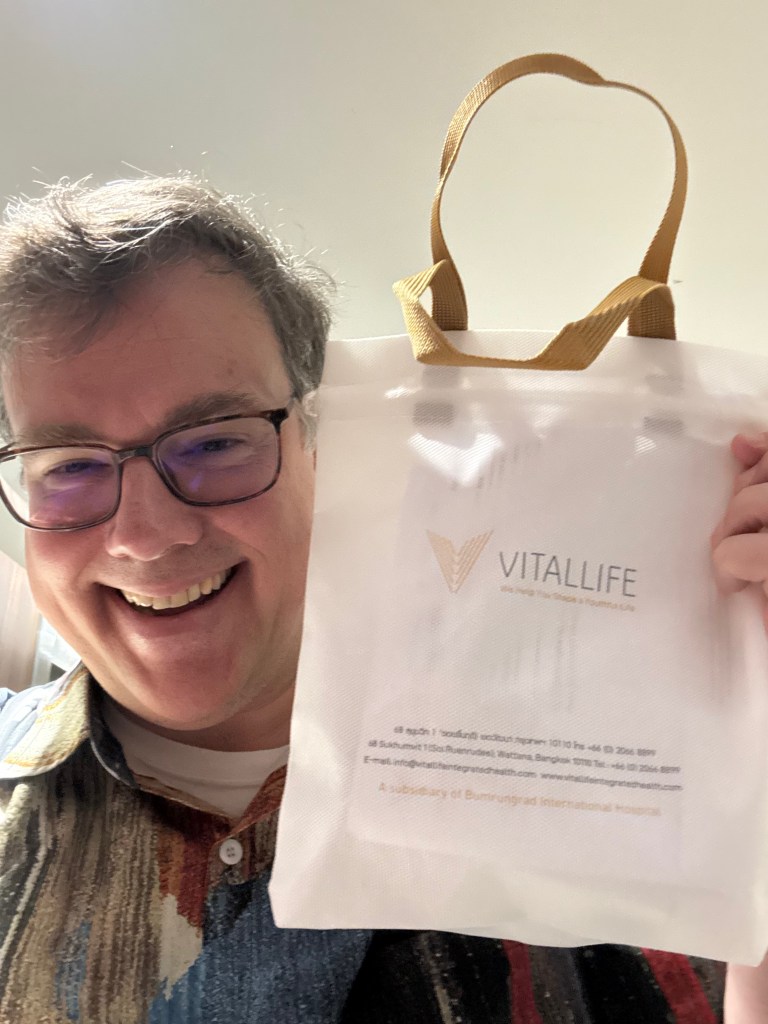
My visit to Bumrungrad was unlike any healthcare experience I have ever had in the United States. The difference in care, experience, and efficiency between the Thai and U.S. medical systems is stark. By comparison, we are still living in the dark ages, and I’m sure the cost for the visit I had would have been at least $1,500, if not more.
I won’t debate whether socialized medicine is better, but I can tell you that the Thai people have access to excellent medical care. From the friendly neighborhood pharmacist to some of the top doctors at large international hospitals, they receive efficient, holistic, culturally and medically appropriate treatment wherever they go. When they need care, they just get it. They are not afraid to seek out medical treatment in the same way Americans are. They don’t stress about how they will afford it.
Then there’s the care itself. In the U.S., when we need medical care, it’s scheduled months in advance, or it’s off to an urgent care that is probably out-of-network. Or we go to the emergency room. That’s not even considering the steps that are required when you are shuffled off to a specialist, which usually requires some back and forth with an insurance company. Then, there’s going to the pharmacy, which is its own minefield and completely separated from the rest of our medical system. Thais don’t have to deal with any of that nonsense, and as a result, they have an effective healthcare system that meets the needs of everyone in the country.
Our system is not designed to meet anyone’s needs. It’s great if you can, but that’s not the norm. Fewer people meet the criteria every year for receiving medical care in America. Perhaps that’s just part of the American cultural experience: we like to think of ourselves and our country more as an exclusive country club that we all pay to play in rather than as a family unit that everyone benefits from, so why should our medical care be any different? I don’t know. What I do know is that if I ever find myself without medical insurance and need a major medical procedure, it will be cheaper and more effective for me to go to Thailand to have it done than it would be in the U.S.
So what’s the moral of the story? Most countries have healthcare systems that are heads and above what we’re used to as Americans. Don’t be afraid. If you have a story about dealing with another nation’s healthcare system, I’d love it hear about it. Also, it wasn’t typhoid either.
Thank you for following along on my journey. If you liked what you’ve read, please be sure to like and subscribe. Until next time, be kind to yourself and others. Stay curious, my friends.


Leave a comment