
I don’t know much about Buddhism. It’s not that I can’t read books on the subject. I have read plenty. It’s not that I can’t understand the core tenets of the faith; I get it. The problem is that spirituality, particularly as an aspect of culture, is something that needs to be experienced for it to be properly understood.
In the west, Sunday is our day off. The roots of that understanding are steeped in the religious practices the western world embraced through Christianity. Eventually, as church attendance started its slow decline across the western world, Sunday is still observed as a day of rest to prepare for the upcoming work week starting on Monday. We don’t question it because that’s just a part of how our society and culture works. Another example of how religion seeps into our western lives without thinking much about it is through expressions like, “the Protestant work ethic.” This expression might be more American, but we know its meaning is based on the value of hard work. More importantly, it’s important to be seen as a hard worker. This is especially true if you have blue-collar, working-class roots. Those are just a few ways that Christianity has impacted our western lives in ways that are just baked into the pie. So, when I say that I don’t know much about Buddhism, it’s because I never experienced it as either a religious or cultural force in my life in the same way that I have Christianity.
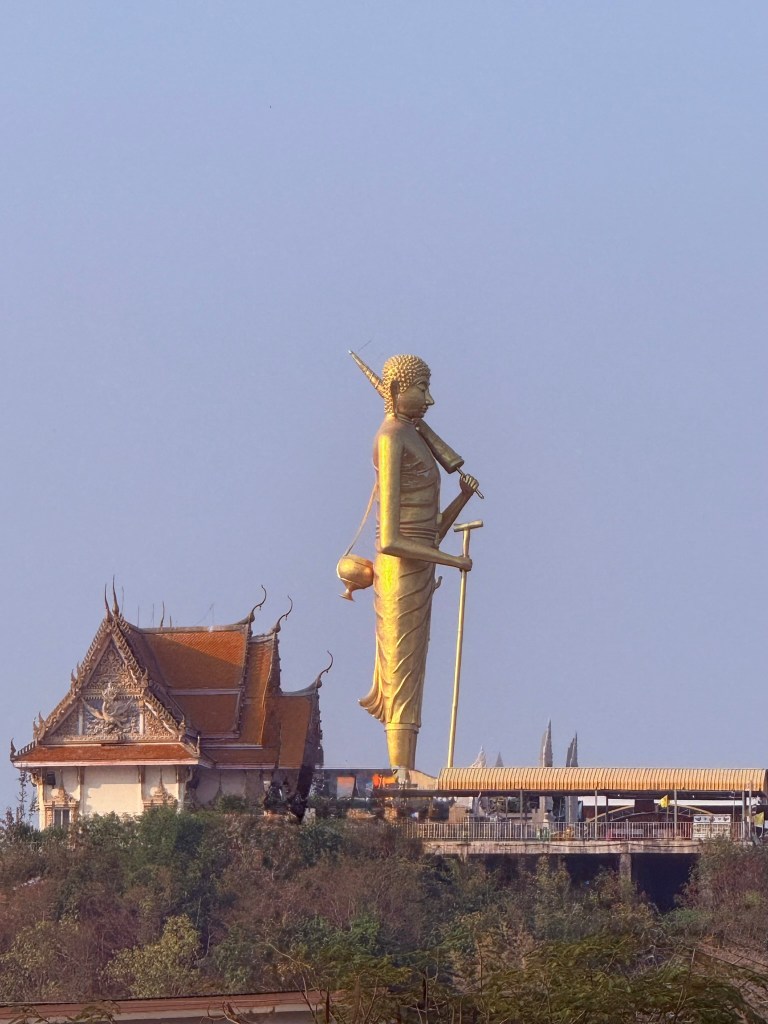
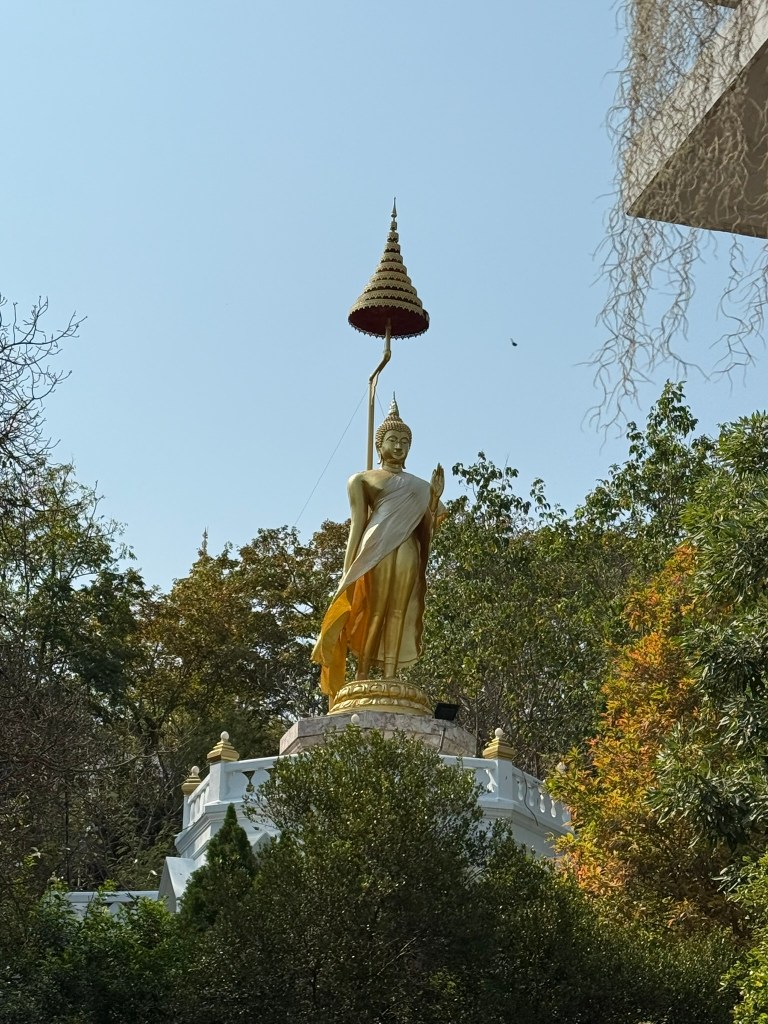
Buddhism is the religion in Thailand. There are huge temple complexes across the country that rival or dwarf the great cathedrals of Europe. There are also random little shrines that pop up in unexpected areas where people can stop, pray, and maybe make an offering. It is a part of the fabric of life. The temples are breathtaking and feel like powerful, holy places, while the smaller shrines feel oddly intimate and deeply personal, if not private.
Buddhism doesn’t have a sabbath day of the week, per se. However, it has holy days that are loosely observed as sabbath days and are tied to the cycle of the moon. This often translates into a holy day about every 7-8 days. At the same time, my own observation is that people here are keenly aware of the moon’s cycle in ways that we don’t in the West, and this ties back into the ebb and flow of Buddhism as just a part of their culture.
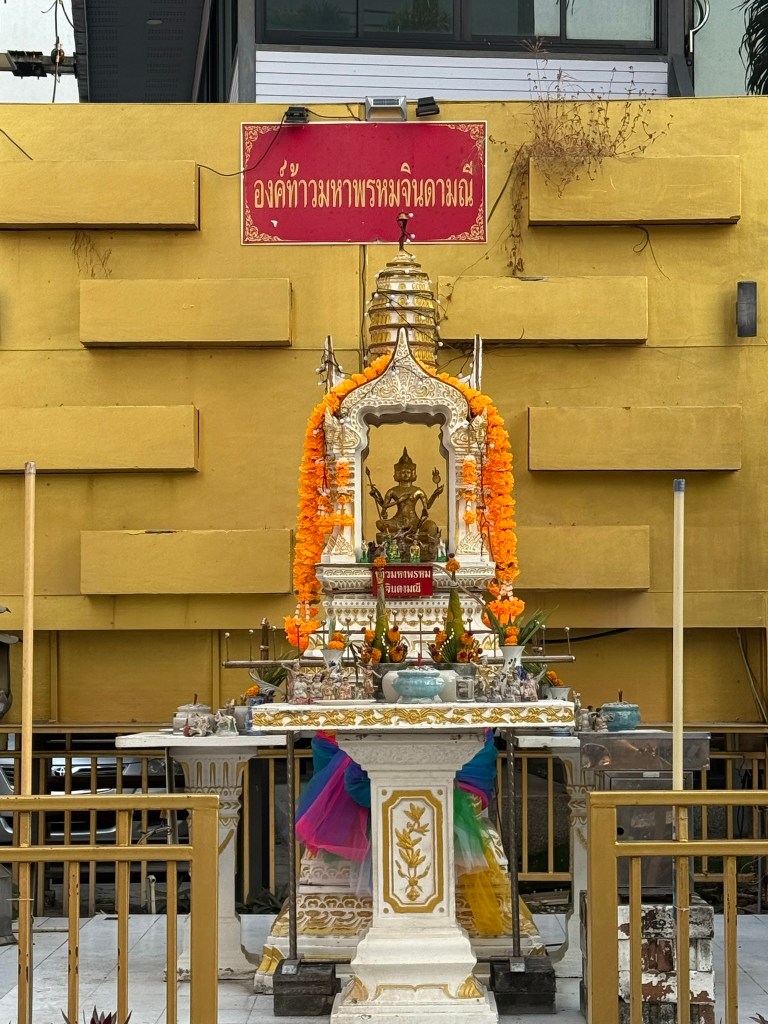
Also, monks can be found going about their daily lives everywhere in Thailand. I’ve seen monks at the airport, riding on the back of scooters, and using all forms of public transit. I’ve seen them out in the streets blessing people and conducting prayers. Monks also serve important roles in Thai society. Often, monks serve not only as holy men but also as counselors, therapists (I’m using these terms loosely), and guides to people having crises of faith.
This is just a regular part of life here. If you grew up in the Roman Catholic faith tradition, then Buddhist monks will also feel very familiar to you. They commit their lives to many of the same principles as priests: giving up all earthly possessions, living a life of poverty, serving others, training, and preparing for the next life. Monks are reliant upon the alms-giving of others and, as such, make sure they are visible and available for people to seek them out. So, if you visit a monk or call upon their services, you are expected to donate to them so they can continue their essential work.
So, I have a small confession to make. If you haven’t picked it up in previous posts, I consider my journey to be a spiritual one. I have always wanted to go live and work abroad, even for a short while, all of my life. I have felt that pull on my soul for as long as I can remember. As a child, I used to stare at maps and imagine what kind of people lived in those places. I wondered what they felt and what they did. I wondered about things like where they were happy, what they ate for breakfast, and did they play video games in their part of the world they called home? Did Japanese kids have access to hoverboards? My earliest memory cementing this as something important to me was back in my days as a Boy Scout when I was exposed to scouts from different countries. Later in high school, I learned that foreign exchange students existed. I wanted to be a foreign exchange student! I was so excited to get a pamphlet and take it back to Mom and Dad to discuss it. Neither of them was interested in pursuing this, nor even in helping me figure out how to pursue this. I was crushed, but ultimately, I understood. The cost of being a foreign exchange student was too high. They couldn’t afford it, and I didn’t have the means either. That’s just how life works sometimes. So, I packed that desire away, but it never left my soul. Fortunately, later in life I was able to realize this dream, and here I am! In Thailand! Doing the thing! So, to say that this is a spiritual journey has really been an understatement! As part of my spiritual journey, I have also taken it upon myself to embrace the spirituality of wherever I go so I can learn and grow and fill my soul with the juice it has so desperately needed.
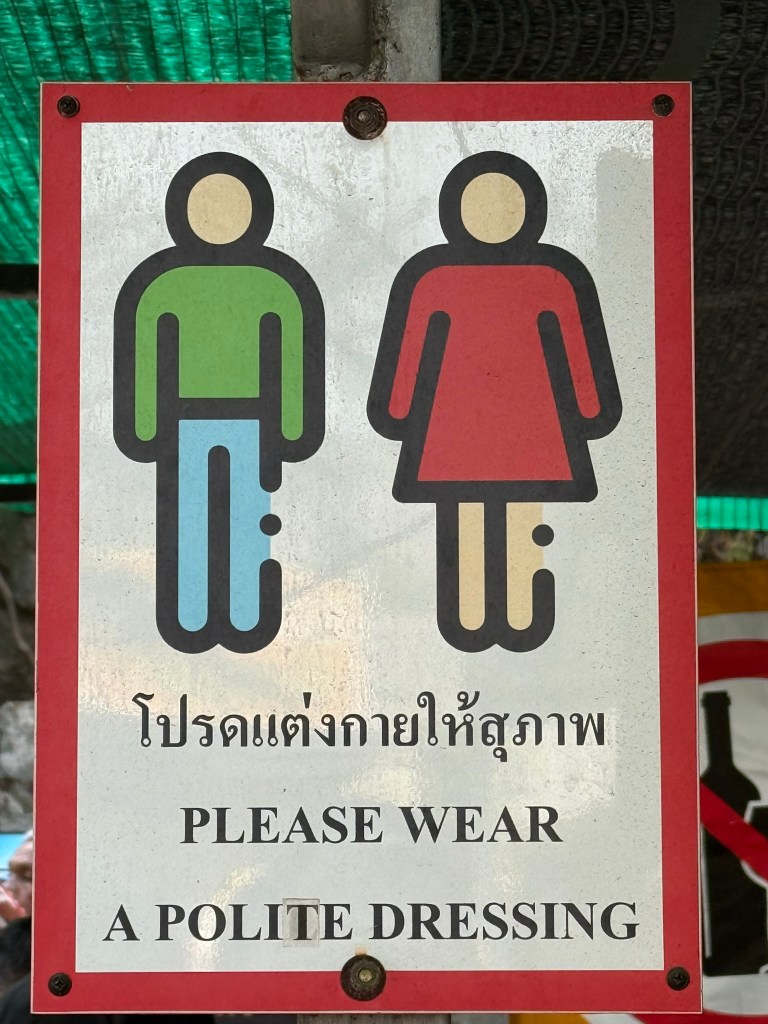
So imagine my excitement as someone on their own spiritual journey to learn that XploreAsia felt it was important for us to spend some time with a Buddhist monk as part of our cultural orientation. As such, we were advised to dress conservatively for our visit. That didn’t mean wearing a suit, but it meant that we needed to make sure our shoulders and knees were covered.
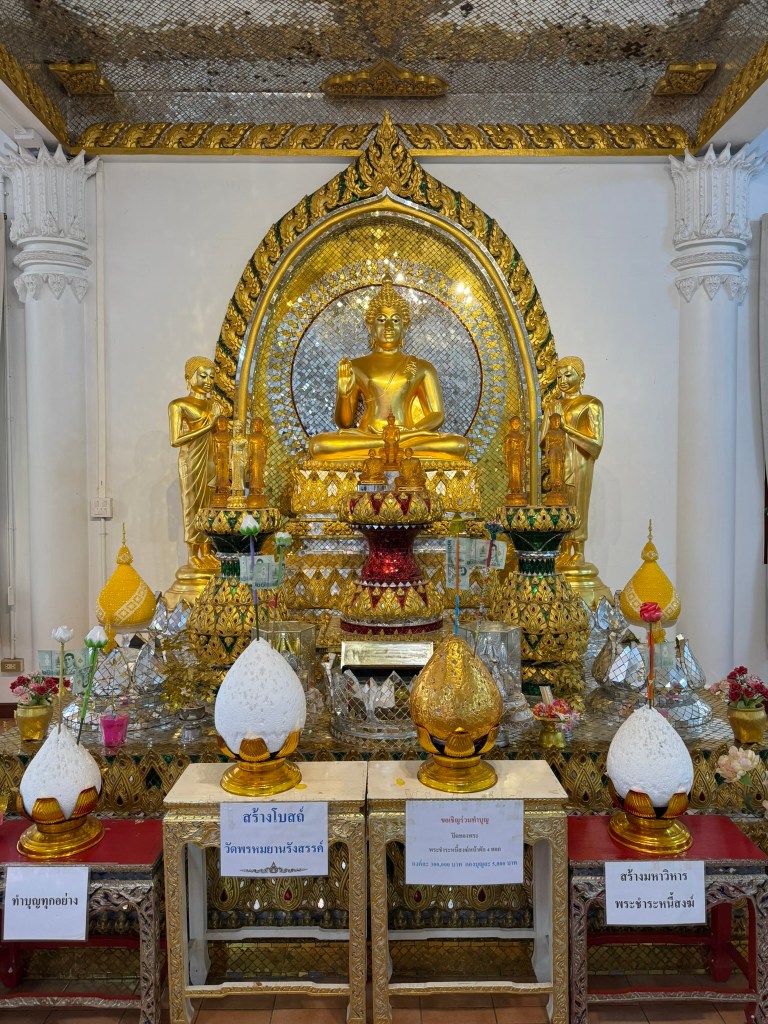
As another aspect of culture and religion crossing into each other’s realms, Thai culture tends to be conservative in nature. I’m not talking politically conservative, but behaviorally conservative. For me and my cohort, as outsiders, it meant that we needed to dress appropriately by wearing clothes that covered our shoulders and knees and to behave suitably for a place of reverence and worship. Before entering the temple, you take your shoes off, as is a part of Thai culture, and then proceed in.
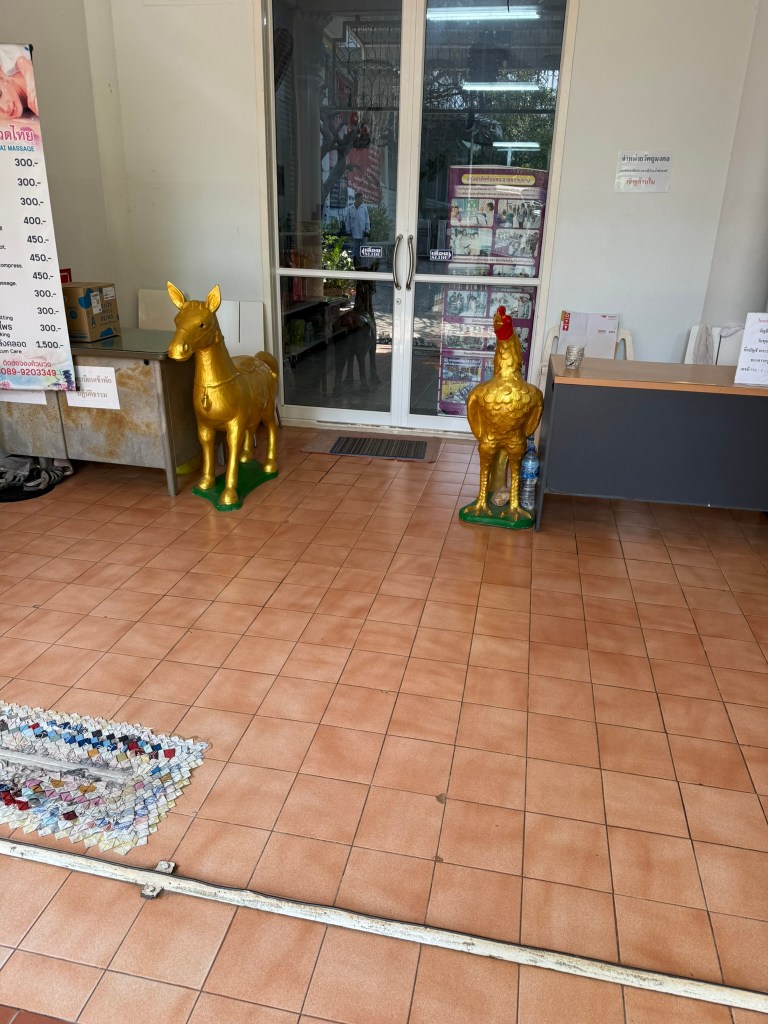
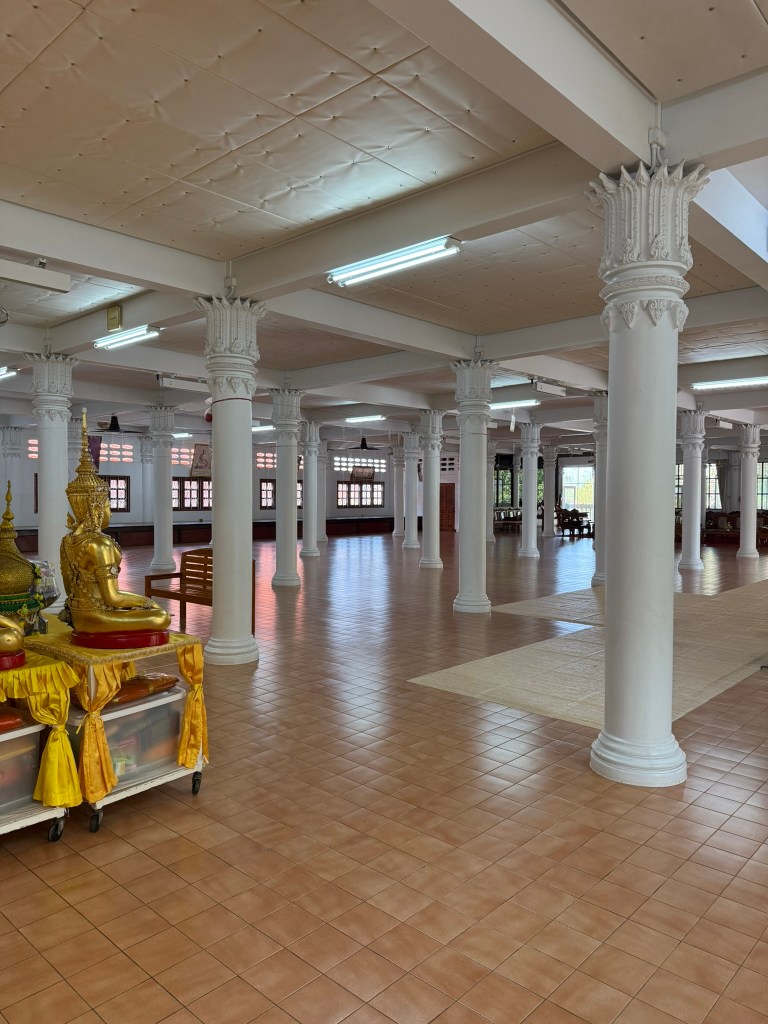
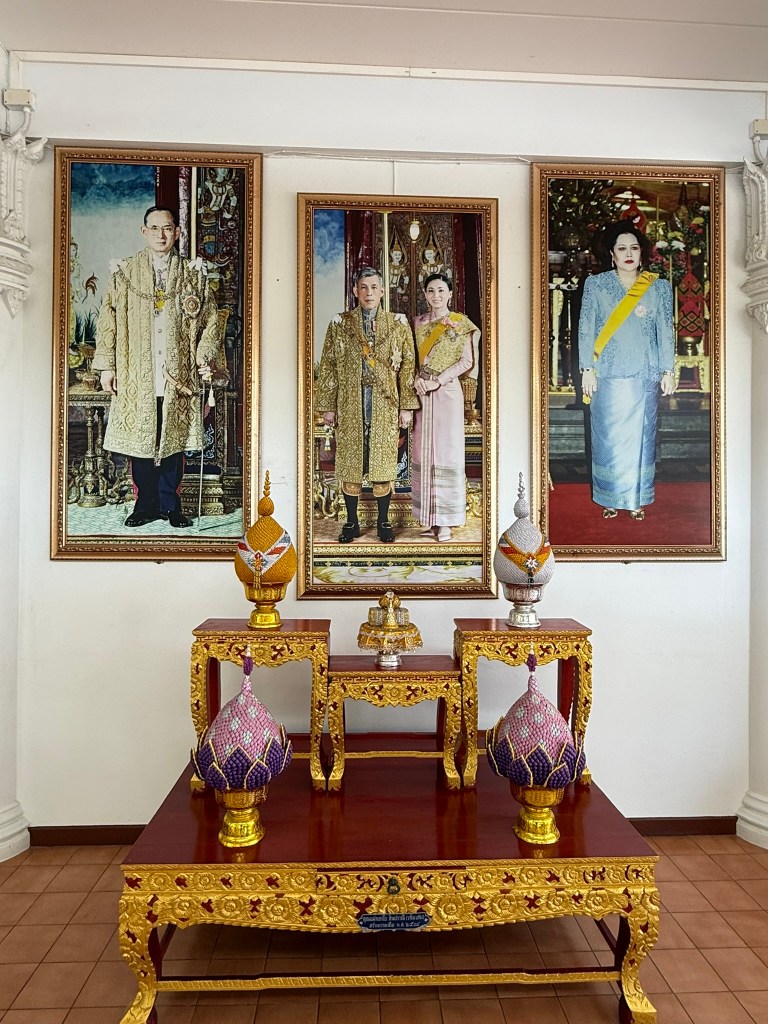
Upon entering, you can feel this is a sacred place. The spiritual energy resonating in the place is palpable. The monk was finishing up a small prayer service, so we waited, watched, and observed before it was our time. When it was our time, we came in and sat down on the floor, cross-legged if possible. I haven’t sat on the floor like this in I don’t remember the last time, so the fact that my body allowed me to still do it was impressive to me. I digress.
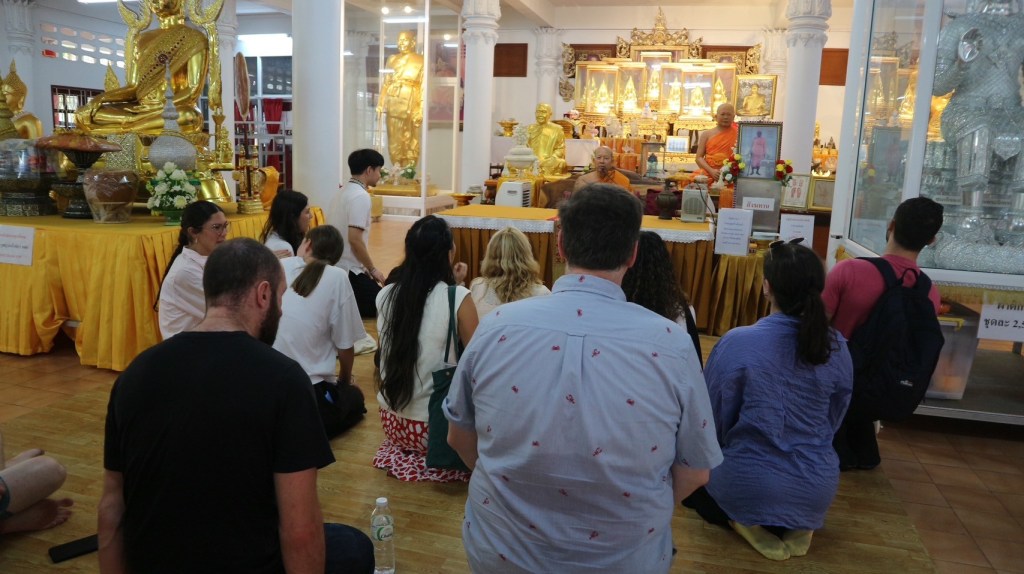
We had opportunities to ask the monk questions. I didn’t get to ask any of mine, but the youngsters were actively asking, and I enjoyed listening to their enthusiasm and to the monk’s answers. Eventually, the monk asked if we would like to learn how to meditate. This is the moment I’ve been waiting for! I was about to experience some authentic Eastern spirituality from a genuine monk skilled in meditation, not from some crunchy new-age hippie with a self-help book.
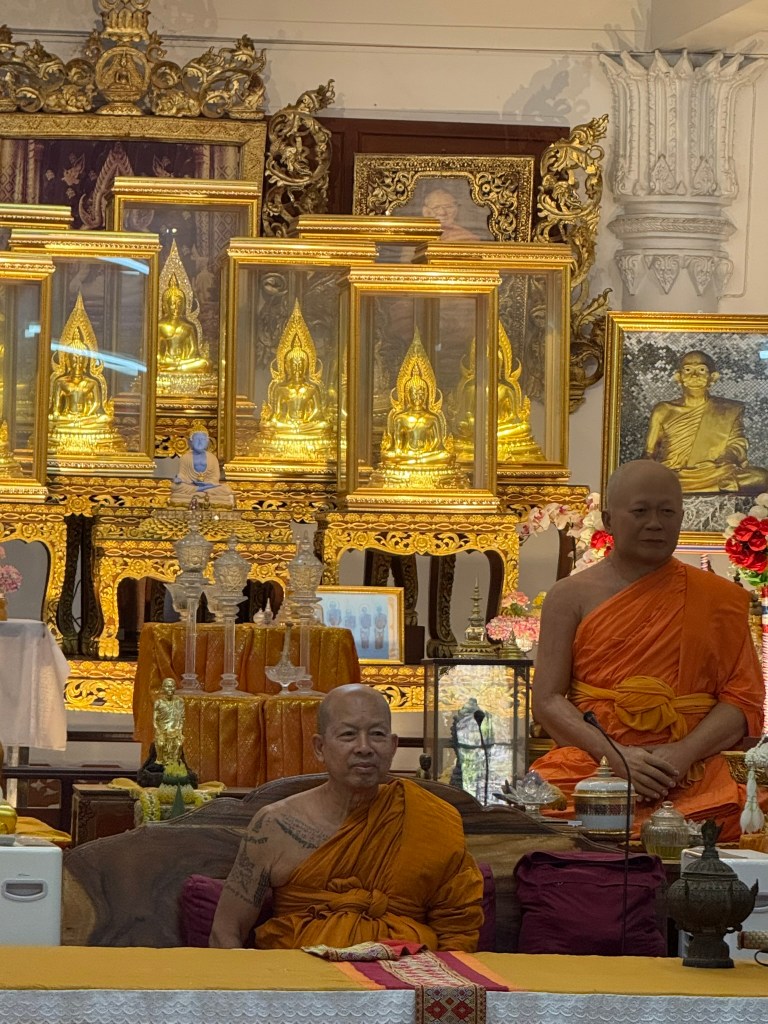
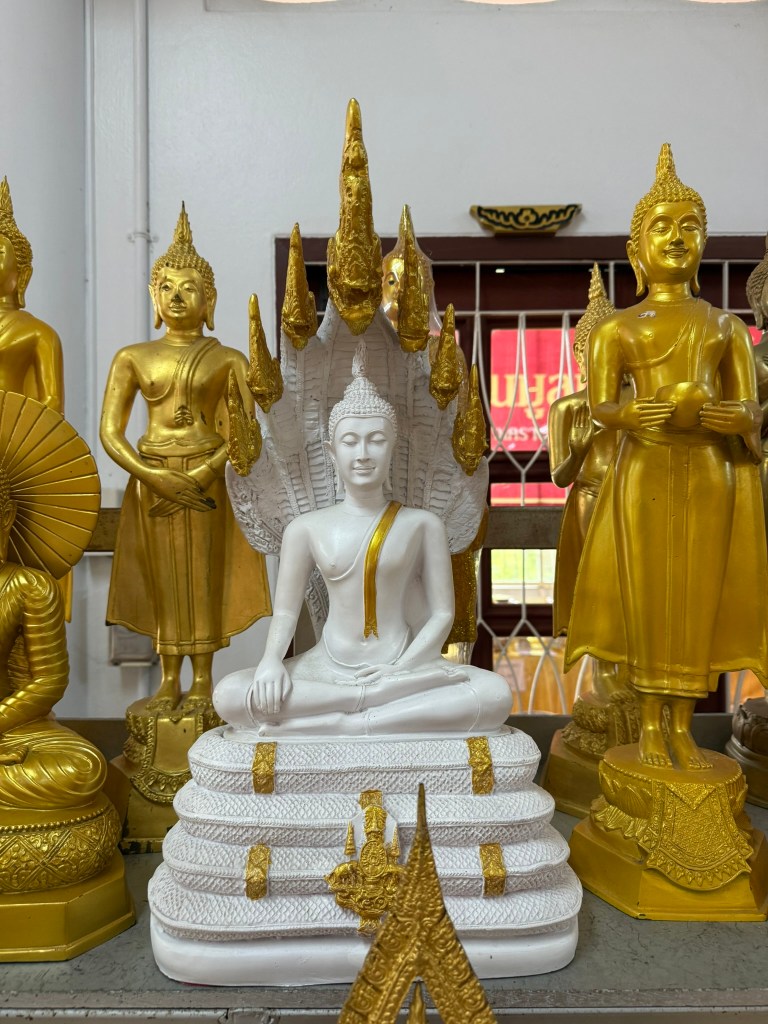
The first thing the monk explained to us about meditation is it’s not a spiritual practice, although it is important to our spirituality. We sleep so our body can repair itself. We dream so our souls can repair themselves, but our brains are always working, and they require rest for repair too. We meditate so our brains can repair themselves. The first step of meditation is quieting the brain.
First, close your eyes and just focus on breathing and counting breaths. In…out…one…two. That’s it. If a thought enters your consciousness, then open your eyes, take a deep breath, and start over. Wash, rinse, repeat for the next 15 minutes. Easy as pie. That seems simple enough. So, I took a deep breath, closed my eyes, and started to earnestly meditate! I was definitely enjoying the silence and focusing solely on my breathing.
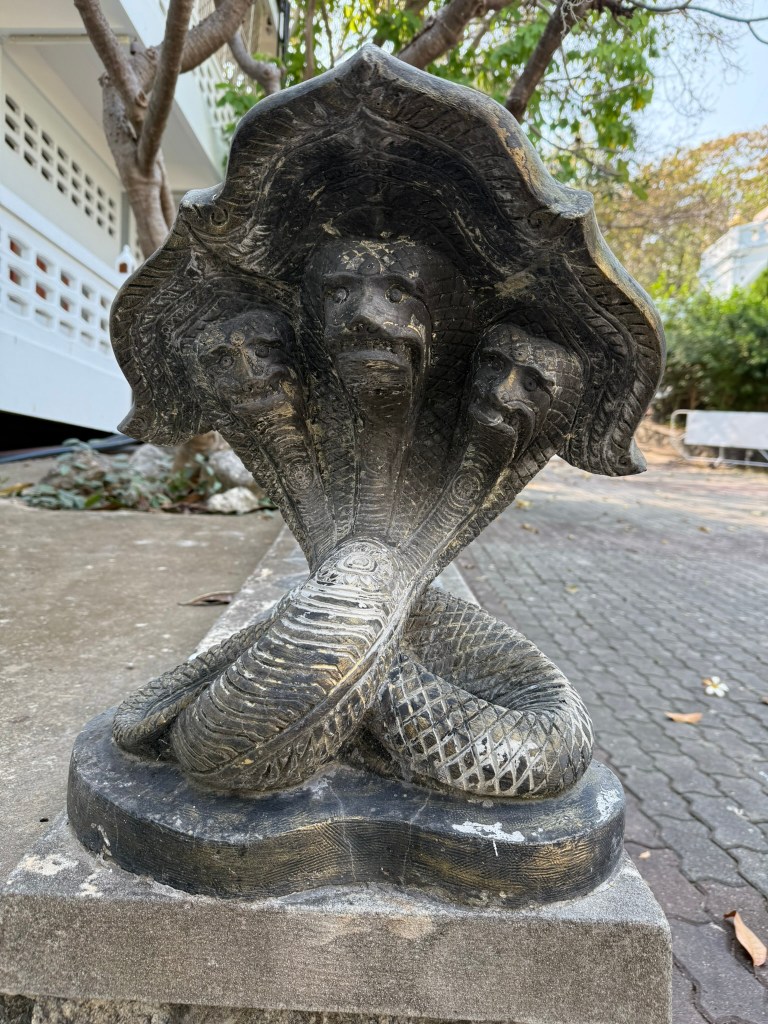
However, because I am human, my mind eventually started to wander, and I had to rein it back in. So, I would open my eyes, take a deep breath, and start over. While that was going on, I became keenly aware that the floor was becoming uncomfortable. I could feel my legs going numb and starting to feel different pain points in my back. It felt like gravity itself was trying to push me into the floor. I felt heavy. 15 minutes might not seem like a long time… until it is. At this moment, I realized how undisciplined my mind really is. It was becoming increasingly difficult to focus on just my breathing when I could feel my body physically starting to ache. Time seemed to stand still. However, I was dedicated to doing this. It felt important, and if I gave up, then I was completely missing the whole point of the spiritual aspect of my journey to Thailand, and I couldn’t let that happen. At some point, near the end of our meditation with the monk, a cock crowed from somewhere outside the temple grounds. The sound was sharp, clear, and had the same clear resonance as a church bell.
Eventually, the monk spoke. As he did, I had some very mixed feelings. I felt like a failure because I couldn’t keep my shit together to do this simple thing for 15 minutes, but I also felt better. My mind was clearer. I could focus on things a little easier, and my brain felt rested. Someone in my group had the same thought as me that the floor wasn’t very comfortable. The monk smiled and said that if we were focused on our bodies being physically uncomfortable, then our minds weren’t wandering. There it was! The missing piece of every single self-help guide I’ve ever read on meditation! All along I felt as if I was failing because I couldn’t focus my mind on not being uncomfortable when all along it’s a focusing agent all unto itself! I wasn’t failing, and I received wisdom about meditation and how it works! What a wonderful gift!
In traditional Thai custom, we kowtowed three times to the monk, thanking him for his time and service, and then we all contributed a small donation, also set up by XploreAsia, to give to the monk. This donation included some cash, but it also consisted of rice and other staples that are common in a proper Thai diet.
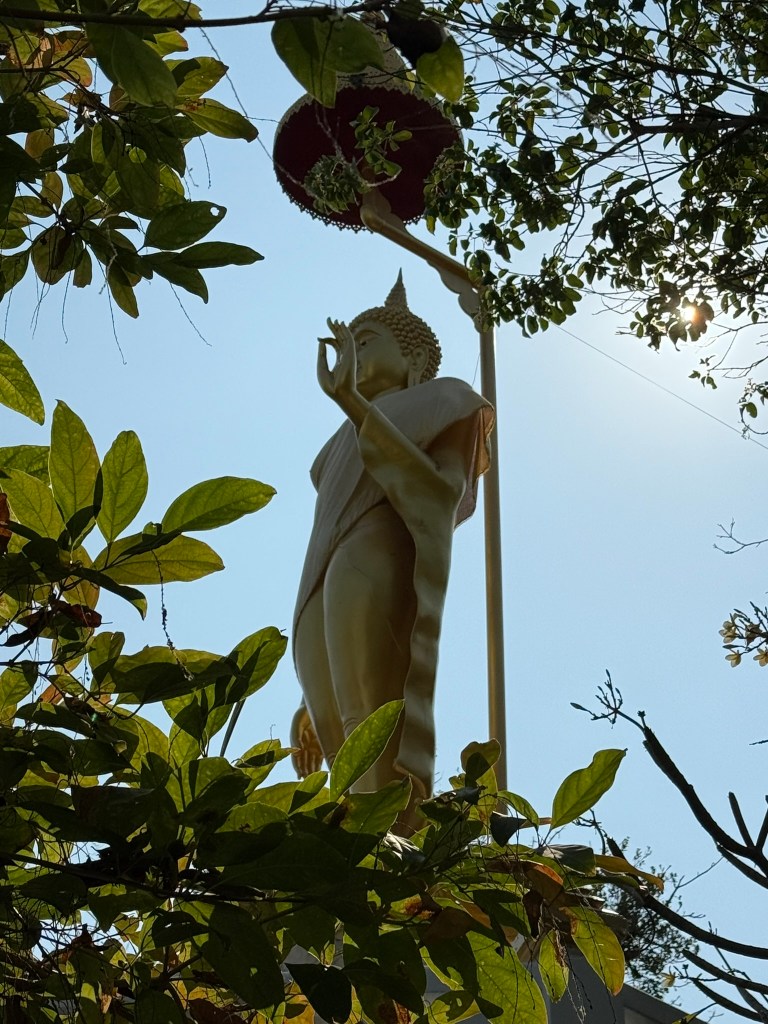
So, what can I say about my temple visit? Besides just feeling better, like a part of my bucket got filled in a way that I was hoping for, I felt that I gained an understanding of myself and Thai culture that I don’t know that most tourists would ever be aware of or actively seek out. After all, unless you speak the native language, you’re not likely to find a monk who actively speaks English.
However, anyone who wants to have a better understanding of the culture they find themselves in should seek out the main religion present in that culture. It will help provide guidance and orientation as to what a culture values. I would also encourage everyone who feels the calling of divinity, spirituality, or a higher power to seek enlightenment wherever they are; they should do it. Further, if you want to understand the culture you are experiencing, you must be aware of the religion and spirituality that are inherently embedded in the culture. It will help you understand it better.
Thank you for reading my post. If you like what you read, please be sure to like it and share it with your friends. If you really like my work and don’t want to miss a post, be sure to subscribe to my newsletter, and you’ll get my posts sent directly to your inbox. Until next time, please take care of yourself, look out for each other, and stay curious.


Leave a comment