A Childhood Etched in Static and Stardust
One of my core memories from childhood was listening to the LP of the communication between Apollo 11 and Mission Control. The record forever ingrained into my mind the first touchdown of humanity on the moon, and hearing Neil Armstrong’s first words from the lunar surface: “That’s one small step for man, one giant leap for mankind.” I listened to it constantly as a small tike growing up in the 70s and early 80s.
Dad was a missile man who repaired guidance systems for the U.S. Air Force, so rockets were a special interest in our house. I remember him telling me where he was when he first learned of the Apollo 11 landing. He was in the U.S. Army then, stationed in West Germany, asleep in the barracks. His bunkmates shook him awake so he could watch the landing in the brief window before the satellite carrying the TV signal slipped out of range. He watched humanity’s first step onto the moon, said, “Huh,” and went back to sleep. Dad always had a penchant for underdescribing everything — a problem his son should probably learn from.
Learning America Through NASA
Still, that moment made a huge impression on me. Whenever anything came on the History Channel, PBS, or any station showing space race footage, I was glued to it. I learned a lot about the Cold War through the lens of NASA and the brave folks who flew their capsules — and later the shuttle — into space. The story was always one triumph of freedom over oppression, and a testament to what cooperation between the private sector and the government could accomplish when goals were clear and the stakes were high.
It became my personal benchmark for what our government could do under effective leadership. Especially so during missions like Apollo 13 or the joint Apollo–Soyuz project, where the U.S. and the USSR — mortal adversaries on the ground — teamed up to showcase the best of human cooperation in space. These were feel-good moments in a high-stakes game that the two countries played everywhere else.
The Space Program as Emotional Refuge
Fast forward to my years studying and learning the craft and art of history; I learned even more about what was at stake. NASA wasn’t just a scientific agency — it was the goodwill ambassador for the American system. It offered a kind of emotional refuge for Americans living under the shadow of MAD. I don’t know how many people tuned in regularly, but I suspect enough did to keep NASA funded because it reassured them that we were trying to win this existential contest through peaceful achievement. Our space program gave permission for Americans of the age to feel proud of their country and, by extension, themselves.
Still, the Apollo program was expensive. Once we beat the Soviets to the moon, there wasn’t much appetite to keep pouring money into a war we had already won. The moon was good, but so was getting out of Vietnam and feeding hungry people back home. Priorities shifted, and NASA seemed destined to remain in low Earth orbit for the foreseeable future. So too did the era of feel-good American triumphs.
The Fragile Miracle of the Moonshot
One of the biggest “what ifs” of that era is what would have happened had Vice President Nixon won the 1960 election. We still would have gone to space, but not with the boldness Kennedy envisioned. Nixon was interested in competing with the Soviets, but he didn’t care about going to the moon — and that matters because it shows how fragile the moonshot really was. The entire arc of American space achievement hinged on a narrow political moment that could easily have gone another way. Would the story have been different? We’ll never fully know. But culturally, the space program has always served its purpose: showcasing the best of America and shaping our global identity as a nation capable of big, inspiring things.
Artemis II and the Return of Wonder
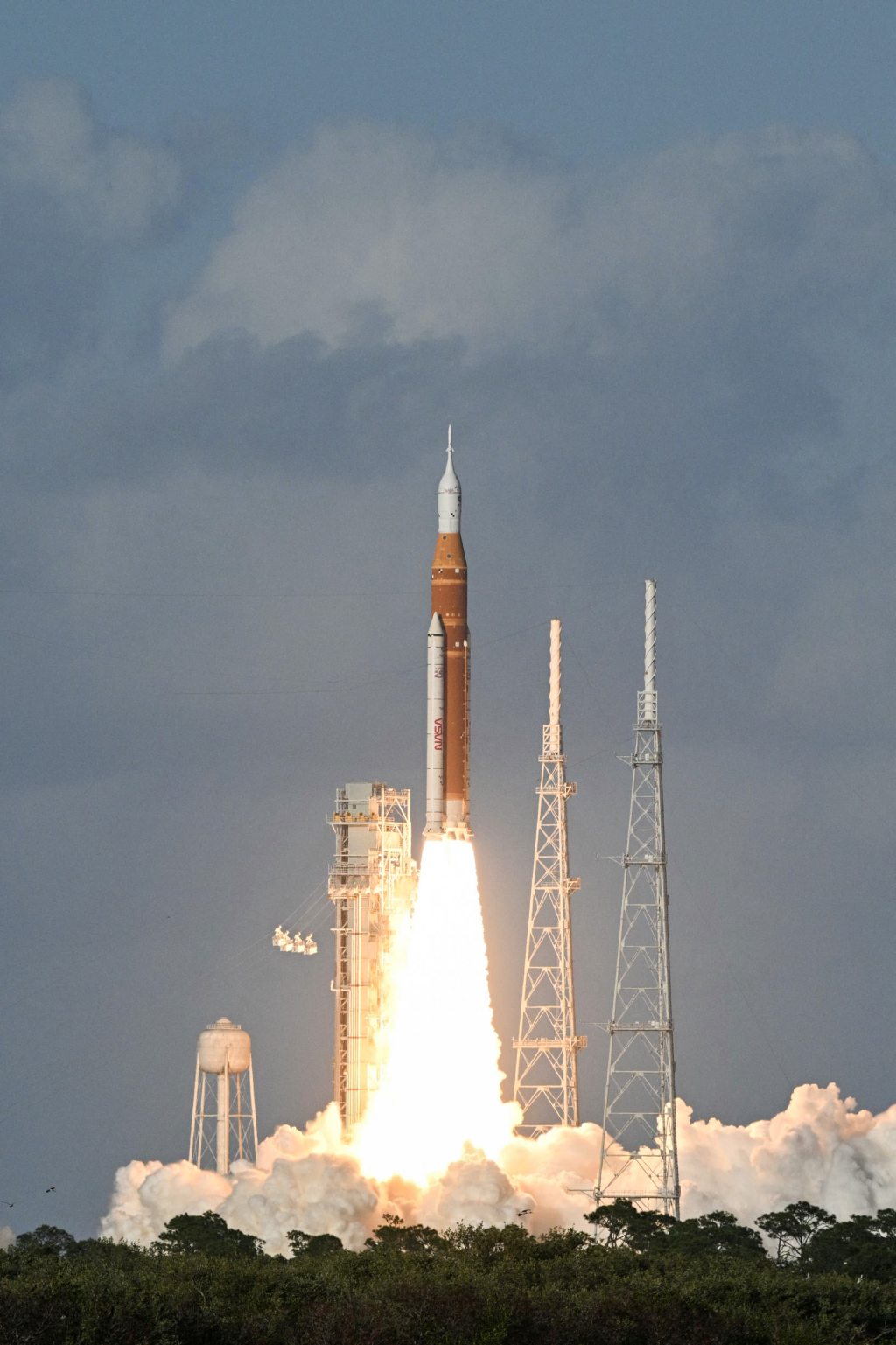
Fast forward to today. I just finished watching the Artemis II launch, carrying an international crew of men and women. As the engines ignited, there was a deep, rolling crackle that vibrated through the speakers — a sound that reminded me, in its own modern way, of the static‑laced voices on that old Apollo 11 LP. It was another feel-good moment NASA hadn’t delivered in over 50 years, and today, it was desperately needed.
In a world that feels like it’s falling apart and an America that feels like it is in collapse, watching us get back on our feet — launching our own rockets, carrying our allies, returning to fly over our old stomping ground — is a moment worth smiling over. A reminder that America, or at least the ideals of America, still resonates with the world. We’re still here. We can still step up to the challenge of doing big things for the good of all.
Today’s launch is a small but meaningful light in a world that seems ready to tear itself apart. My inner child is content for the moment, and now we look to the future and see what’s on the horizon. Godspeed, Artemis crew. You carry the weight of the world on your shoulders, and we couldn’t be prouder. For at least this one brief moment, it feels good to be an American, and that is worth something in this economy.

 Scott Abroad
Leave a comment