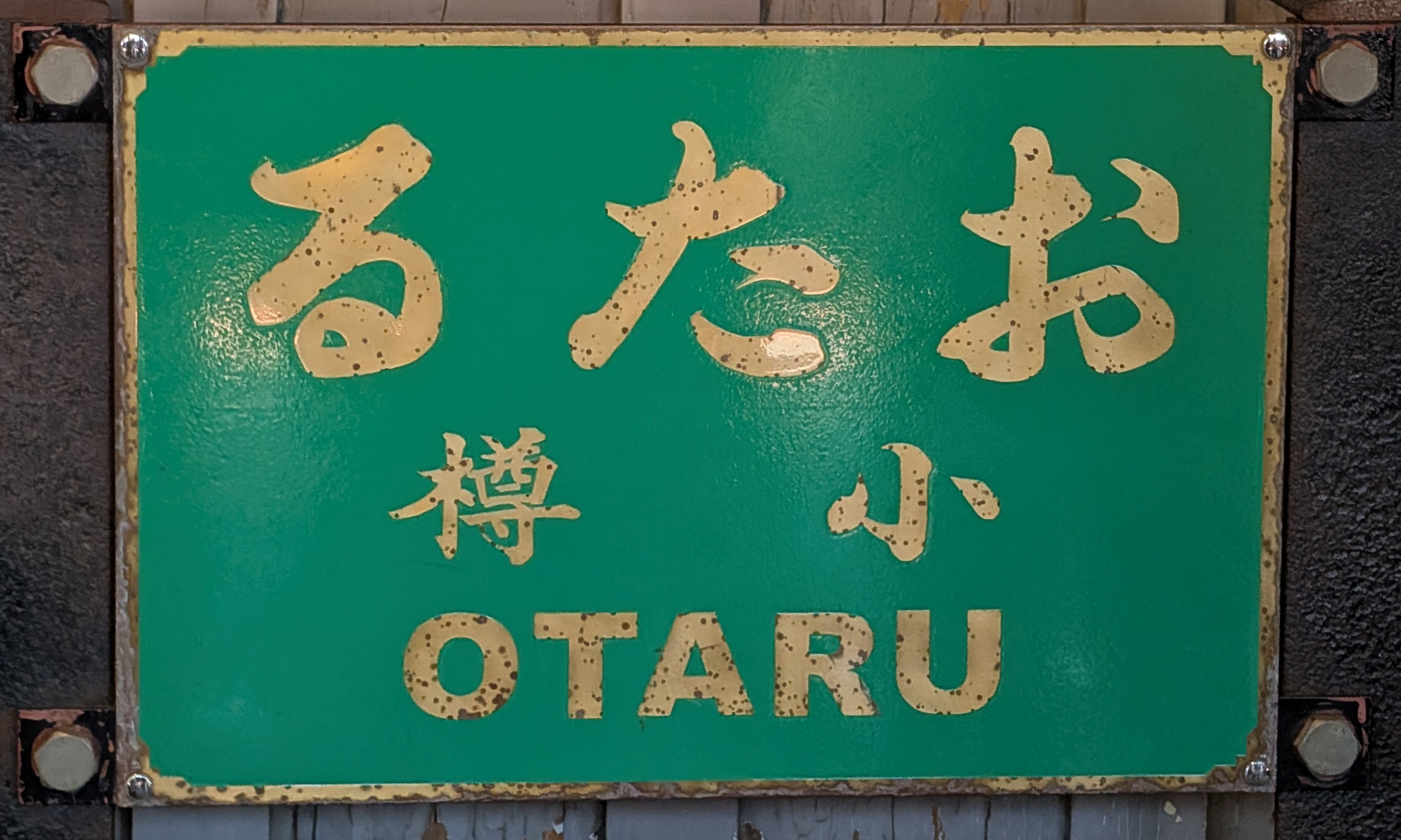
Just a few items before delving into this post. First, if you like what you’re reading and want updates delivered directly to your inbox, please like and subscribe. If not, that’s okay. This is a no‑pressure blog, and I’m grateful you stopped by to read this chapter of my journey. If you feel inclined, say hello and tell me where you call home. I’m always curious where these stories land.
Second, if you’ve been following my journey for a while, you’ve probably noticed my posting schedule has been… inconsistent. I’m trying to remedy that by writing more often and scheduling posts weekly. This has helped me get ahead of the blog so things stay more consistent. This part of the story, however, needed to be sped up a bit, so I decided to break it into three parts and post them closer together. Otherwise, it would take us a month just to get across the Pacific. While this opening leg of the story is important, it doesn’t need to dominate that much time. So today, I’ll conclude this portion and move into our first day in Japan in the next post. After that, posts will likely return to once a week. Maybe. I’ve found a natural writing rhythm again, so perhaps they’ll continue to spill out faster. We’ll see. Either way, I’m aiming for more consistency.
Third, I want to take a moment to talk about Starlux Airlines. They are not a sponsor (though if anyone from Starlux is reading this, I’m open to a relationship), but since you’ve seen their screens and planes in previous posts, they deserve a mention. Their staff and flight crews are top‑shelf. The planes are clean, streamlined, and new. I especially appreciated flying on their A350‑900 from Seattle to Taipei. The A350 has something that the Boeing 777s just don’t have. Both legs of our journey were easy, the food was good, and the amenities were delightful. My only complaint is about the seats — not because the seats are bad, but because I am outside the “average traveler” range they’re designed for. Around hour ten of the fourteen‑hour flight, things got uncomfortable. Still, I know I’ll be making future trips to Taiwan, and I can say without hesitation that I’d happily fly Starlux again.
Now, on with the post.
The Bag

Ever since I started grad school, I’ve had the same black backpack with the Marshall University logo blazoned across the front. This bag has been in near‑constant service as my go‑to for holding everything important since 2017. Whether it was going to work, going to school, or hiking up mountains in Thailand, this bag has gone everywhere and held up remarkably well.
It has survived the abuses of carrying 50 pounds of books, tech gear, and whatever else I deemed essential to life at the moment. It has survived COVID, torrential rain, heavy snow, subzero temperatures, scorching heat, and humidity so high it once killed all my electronics. It has acted like a cat hammock, and has survived relationships, death, enough nautical miles in the air to circumnavigate the globe several times, and enough road miles to drive from Alaska to Argentina and back.
To say this bag is tough is an understatement. When I bought it, I expected it to last through grad school but not much beyond it. I was wrong. It has been my companion through nearly every season of my life for the last decade. If this bag were sentient, it would be the old friend who always shows up, always remembers your birthday, and always knows where your passport is. It has kept track of my belongings, and in return, I have kept track of it. A perfect symbiotic relationship.
Not once has it failed me.
Taipei

So, when we touched down in Taipei, it felt like the universe had given us a small nod of approval. We made it across the Pacific without incident — no mid‑air meltdowns, no emergency landings, and all our belongings intact. For two people with wildly different travel styles, that felt like a minor miracle worthy of a papal blessing.
Now all we had to do was make our connection to Sapporo, get through customs, find the right train, and check into our hotel in Otaru.
Four easy steps. Simplicity itself.

By the time we stepped off the plane, the adrenaline that had carried us across the Pacific evaporated instantly. My body remembered that I had not slept for nearly two days (crossing the international date line will do that). I’m a bit of a princess when it comes to sleep anyway, so I have no idea what kind of sorcery allows people to sleep on airplanes. Whatever gene that requires, I do not possess it.

My tailbone felt like it had been folded into origami. My partner wasn’t faring much better. Her old knee injury flared up somewhere over the Aleutian Islands, and she was moving with the stiff determination of someone refusing to let pain win but absolutely negotiating with it. And we still had a five‑hour layover at Taoyuan International Airport.
Five hours.
Five. Hours.
Long enough to distort time for people already struggling with a sense of time, but not long enough to justify a nap without risking missing the next flight. We were tired, sore, dehydrated, and running on the kind of mental fog that makes you forget parts of your own identity.

Still, Taiwan is lovely. The airport is clean, calm, and surprisingly smooth. The signage makes sense. And despite our exhaustion, I felt a sense of ease here that I haven’t felt in the U.S. in a long time. Asians are kind, helpful, mindful, take pride in their home countries, and help foreigners get on their way; something that’s hard to explain unless you’ve experienced it. A traveler could do far worse than five hours at TPE.
We shuffled through the terminal like two sleep‑deprived zombies, clutching our bags, sipping our first coffees in Asia, and trying to keep each other upright. We found a quiet corner to stretch our legs and watched the world go by. Airports are always a smorgasbord of people‑watching, but in a different culture, the stories shift. Most travelers blend in, unless they’re American. We tend to stick out a bit. While my partner was in the bathroom, a group of American missionaries stumbled on our position. They were all wearing matching loud shirts with a church logo and Bible verse, and were on their way from Somewhereville, USA, to Thailand to do The Lord’s work. One of them approached me with a pamphlet. I smiled, thanked them, and immediately ignored them. Polite indifference is the best strategy to engage these people with.
Americans are my people, but these specific groups of Americans are not my people. They can be genuinely insufferable.

This isn’t the first group of missionaries I’ve run into abroad, and I’m sure it won’t be the last. In my humble observation, they always seem more interested in self‑aggrandizing and the glory of saving souls than in solving real problems. But that’s a different post for a different day. Despite our exhaustion, we enjoyed being there in the moment, halfway between the life we left on hold in the U.S. and the one we were flying toward in Japan. After coffee and pastries, we meandered to our next gate and started the countdown to Sapporo.
The Flight to Sapporo

Boarding was mercifully smooth. No drama, no frantic sprinting, no gate changes. Just a calm, orderly line of people who somehow know how to board a plane without acting like they’re escaping a burning building. Asia understands how to queue in ways America never has.
Once seated, exhaustion hit like a freight train. We pushed back on time but were stuck on the tarmac due to a control tower malfunction. We saw a Hello Kitty airplane, and my partner briefly chided me for not booking us on that one.

For a moment, I thought I might sleep. I didn’t, but the idea was comforting. My partner shifted around trying to find a position that didn’t aggravate her knee. Eventually, we took off. The flight was uneventful in the best possible way. We watched the weather shift from humid Taiwan to the cool north of Hokkaido. We imagined what life was like on the islands below us.
Then the captain announced our descent into Sapporo.
Japan. We were here!
As we descended, clouds gathered and rain began to fall. Somehow, this started feeling more like home — as if the universe needed us to know it had heard us and directed us to the right place. By the time we landed, we joked that we had really left; Sapporo looked and felt a lot like Seattle. We even rated the air quality and decided it was nearly on par with Seattle’s.
My partner looked around with wide eyes, and I could see her falling a little in love with Japan. My anxieties about her hating it began to fade. My international experience and travel planning had paid off. We hobbled to baggage claim and marveled at how everyone quietly lined up waiting for their suitcases. Japanese efficiency expressed in silence — an introvert’s dream.
Then came customs.
Customs
It was efficient, yes, but also chaotic. More chaotic than I expected from Japan. A sea of travelers funneled into lines that multiplied and merged like a math problem from hell. Screens flashed instructions. Workers shouted something about QR codes. Their whole job was to keep the line moving at all costs. Still, as we learned, if we had figured out the QR code part ahead of time, we would have been through in minutes.
We hadn’t.
My partner was on the verge of a meltdown. She was sleep‑deprived, in pain, and overstimulated. My heart broke for her. There was nothing I could do except endure it with her.
Eventually, we reached the counter, filled out a form, and were waved through. Just like that, we were officially in Japan and allowed to stay for up to 90 days. We weren’t staying that long, but it felt like we had escaped prison as we stepped into New Chitose Airport proper.

The Train
The sights, the smells, the chaos of navigating a new airport can be disorienting. I loved every minute. My partner, however, was holding it together — but barely. We stepped aside so she could get her bearings. As crowds rushed past, she started to cry. She told me she had never felt utterly invisible in her life, and she hated it.
My heart broke. This was my idea — my dream that she decided to join me in. My fault, or so it felt. My weakness is that I can’t bear it when people suffer because of me. Even if I know, deep down, that it’s not true, I shoulder that burden. Nobody should ever suffer because of my decisions.
I held her while she cried. A passerby asked if we were okay. She collected herself, thanked me for the moment of vulnerability, and said she was ready to continue. I hugged her again, relieved. We slowly proceeded to the train station, taking it all in.
On the surface, it was simple: get on the train to Otaru. What we didn’t expect was that Otaru had three stops — and we didn’t know which one we needed. We also saw something about reserved seats and thought that sounded wise.
With full‑chested confidence, we bought tickets, walked to the turnstile… and were promptly rejected. A kind local tried to help, but even she couldn’t get us through. She pointed to the ticket counter, where we should have gone in the first place. Still, we sorted it out, bought tickets to the last stop in Otaru, and figured we’d get off earlier once we knew which station was ours.

We boarded, found our reserved seats, and stowed our luggage in the cubicle. I placed my backpack on the shelf above us. We were tired, but it felt like victory. One of the things I preach about travel abroad is learning how to navigate public transportation. We had a little learning curve thrown at us, but we figured it out — and that is a small victory. Surely the worst was behind us.
We eventually figured out that our stop was the first Otaru station, not the last. It was dark outside, so we couldn’t see much. However, the cyberpunk glow of the city lights was mesmerizing. We waited patiently for our stop.
Finally, it arrived.
We got up, retrieved our luggage, stepped off the train, and started walking toward our hotel. All was well. We were tired but intact, and I felt lighter for having experienced all the highs and lows of the last two days. I was ready for a real bed.
And then, I realized…
My bag! It was gone!

Leave a Reply