The Culture You Think You Know
The thing about culture is that it often shows up in unexpected ways and surprises you. Even when you think you know, you don’t. Looking back on my first encounter with Kyousuke‑San, I now realize I had absolutely no idea what cultural script I’d wandered into. In the U.S., meeting a neighbor usually involves a wave, a smile, maybe a “Welcome to the neighborhood!” and, if you’re lucky, a plate of cookies.
In Japan — or at least in our little corner of Otaru — it apparently involves a man silently materializing from behind the trees in his garden like a ninja, staring into your soul, and interrogating you about your long‑term snow‑management strategy.
Up to this point, I’m pretty sure I had completely failed my opening introduction. Every smile was met with stoic silence. Every attempt at conversation landed with the grace of dropping an anvil on your foot. What I didn’t realize was that this was the introduction. The silence wasn’t disapproval; it was observation. The questions weren’t hostility; they were responsibility — a way of gauging my character and whether I was going to be part of the community or a burden everyone would have to deal with. And the eventual call about snow fences? That was the Japanese equivalent of a neighbor giving me a smile and a handshake.
It turns out that in Japan, acceptance doesn’t always look like friendliness. That understanding bumps up against something else at the core of Japanese culture: mindful observation. Even when you think they aren’t paying attention, they are. What you do when you think nobody is looking matters, because I can guarantee someone is looking. Character matters in Japan. It’s the currency that underwrites everything else.
Now, on with the post.
The Morning After
My partner and I slept hard the night before. Whatever was eating at her still hadn’t fully manifested. She looked a little rough, but one of the gifts she — and honestly, many women — possess is the ability to put on their best face and move through the world with a level of style and grace no man I know can match. Still, there was a heaviness in her that didn’t belong to the morning — something quieter, older, and harder to name.
I asked her about it over breakfast. She smiled and said her knee was bothering her, but nothing a little Tylenol couldn’t fix. She said it lightly, but there was a tightness around her eyes that didn’t match the tone. Like me, she was excited about getting up to the house and diving into the cleaning. Unlike yesterday, Ryo wasn’t coming to pick us up. We had to handle that part on our own. Which worked out well — we agreed we needed to catch a taxi to DCM, buy our cleaning supplies, and then head up to the house to start clearing out the cobwebs and putting some shine on her.
Autumn on the Curb
We finished breakfast, went out to the curb, and waited for the taxi. This was late September drifting into early October. The leaves were starting to change, but the flowers still had life in them. The air was clean, cool, and refreshing, and the sun was warm on my face. It was the perfect early autumn day.
My partner nudged me. “What do you think? Is it everything you hoped it would be?”
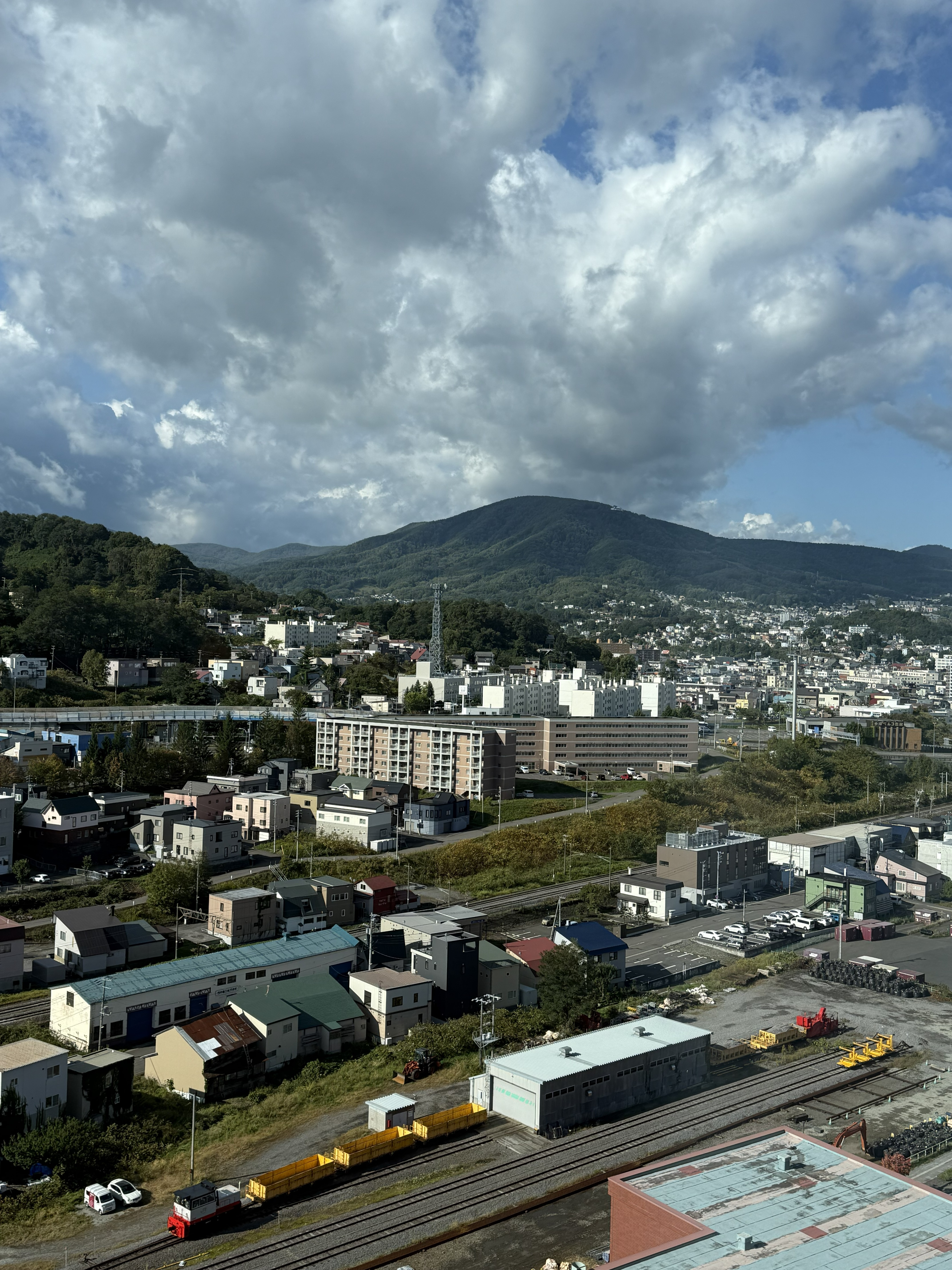
I smiled and squeezed her hand. “And more. The tunnel everyone goes through getting in and out of Otaru, the houses, the mountains, the ocean, the trains… It’s everything I would’ve dreamed of building as a kid putting together model railroads.” Another childhood love of mine. I haven’t touched the hobby in years, but it’s proof that what we do as kids matters. We grow up, but our inner kid remains — and sometimes you have to let them come out and play.
She smiled, and I asked, “What about you? Is it everything you wanted?” She went contemplative, torn between wanting to talk about what had been occupying her mind and knowing the taxi was probably almost there. “It feels good. It’s amazing that we can say we live here now. How lucky are we?” She wasn’t wrong, but there was more beneath it.
“How’s your knee?”
“It hurts. I’ll take it easy today.”
“Okay.”
That was all the time we had before the taxi pulled up. We got in, and the driver whisked us off to DCM. We could tell he didn’t quite know what to make of us. After all, he was picking us up at a high‑end hotel by the bay and taking us to a home‑improvement store. He gave us the kind of polite side‑eye that says, I have questions, but I will absolutely not be asking them. Still, he didn’t pry; he just took us across town. We watched the city blur by until we ended up in the DCM parking lot. We thanked him, he smiled, and we stepped out so he could pick up his next rider.
Lost in the Aisles
Inside, we agreed to split up and grab the supplies for our assigned cleaning projects. I headed toward the kitchen and bathroom aisles while she went off to flooring and home goods. Walking those aisles, I was fascinated by the sheer variety of products. Lowe’s has plenty, sure, but DCM felt like someone had blended a hardware store, a home‑goods shop, and a lifestyle catalog into one. If I had to guess, their product lineup is at least three times as varied.
As I looked over the choices, I wanted to know more about them. So I started picking up items and flipping them over to read the labels. Of course, they were all in Japanese. So I pulled out my handy‑dandy Google machine to translate, and down in the corner of every product I found the label I was looking for: “Made in Japan.” The word made is the key here. Not assembled, but actually made in‑country by Japanese companies.
Seeing that deepened my fondness for all things Japanese. It reminded me that Japan is still very much a manufacturing country. It also stirred nostalgia for an America I remember but no longer exists. We don’t “make” anything anymore. We assemble. The foundry work for most American products is done overseas. Even solid American companies that claim to offer choice often ship items from the same assembly line in Asia. It didn’t used to be this way.
But that was then, and this is now, and the reality before me was several aisles of cleaning products offering real choices — choices I needed to make soon.
My phone dinged. It was my partner. I’d been staring at labels for almost an hour and hadn’t picked up a single item.
“Where are you?” she texted.
“Aisle 10. I haven’t moved. Where are you?”
“Right here.”
I looked up, and sure enough, she was standing in front of me with her cart — broom, bucket, sponge mop — and a big grin.
Shit. She knew I was lost in thought. I grinned back.
“What were you looking at?” she asked.
“Do you see all these products? They’re all made in Japan. We don’t do that anymore.”
“Is this why you haven’t picked out anything yet?” She hovered between mildly irritated and mildly amused.
“Yep.”
She rolled her eyes and gestured at the cart. “I’m ready.”
“Okay.”
I hastily grabbed sponges, rags, soap, and mold‑and‑mildew cleaner. We checked out — no drama, nothing difficult — and that still amazes me. I don’t know why, but checkout always seems to go smoother than I expect. It makes me wonder if it’s this easy in the U.S. for non‑English or non‑Spanish speakers. A thought for another day.
Armed with our supplies, Joy pulled out her phone, hailed a cab, and within minutes, we were turning up the street to our house. Kyousuke‑San was outside as we went by, so we waved. He looked into the cab, saw us waving, and looked genuinely surprised. He smiled and waved back. He said something friendly in Japanese, we smiled, and he headed back to his house. Progress with our stoic ninja neighbor…we think.
The Slippers in the Doorway
We opened the door and walked in. I asked Joy where she wanted to start. She said she’d go upstairs. I decided to start in the bathroom. For some reason, the one room we hadn’t gone into yesterday was the toilet room. I opened the door and gasped — not at the state of the room, which looked no more or less neglected than the others, but because of one thing the heir had forgotten to take: the old owner’s slippers. Blue, worn, and quietly waiting.
Joy started to cry a little, and a wave of something — not quite melancholy, but presence — settled over us.
“Her slippers,” I said.
Joy took a moment to center herself and spoke into the house: “We see you, Mama‑San. We’ll take care of your house.” For a moment, I swear the air around us changed. As if there was acknowledgment. Not happiness, or sadness, but a feeling of relief. Perhaps Mama‑San was feeling our presence as positive, or perhaps we are just two crazy Americans up in our feels, but it did feel like a weight had been lifted, a burden shared.
“Rest easy, Mama‑San, your home is in good hands,” I said.
Becoming Caretakers
From that moment on, we simply acknowledged that we were the caretakers of our new house, making it ready for our use, but also inviting her spirit to still call this place home. We put her slippers in the entryway, tucked off to the side, as a sign of her presence.
From there, we went about cleaning our separate spaces until Ryo showed up. He got our utilities activated, and the gas company was on their way out to handle some inspections and make recommendations for appliance updates/installations. The gas company recommended we replace our water heater and made recommendations for a cooktop. We approved the work, which was going to be completed after we left Japan for this trip. With that, Ryo’s work was completed. He bowed and told us that if he needed anything, he was there for us.
Listen to Your Body
When we left to go back to the hotel for the day, we were dirty and felt like we had a full day. The house was cleaned at least well enough to feel good about starting to buy appliances, and start buying bedding and furniture. It also felt good that from here on out until we flew back to the U.S., this was our time. That didn’t mean there wasn’t a bit of a time crunch ahead of us. We had one more night at the hotel, so if we didn’t at least get the bedding situation figured out, we’d be sleeping raw on the bare floors. We know a good bit of Japanese culture slept on futons on the floor, and we’re okay with that arrangement, but without blankets or pillows, or futons, it promised to be uncomfortable, at best.
By the time we got back to the hotel room, Joy was visibly hurting. It was no longer something she could smooth over and put a happy face on to muscle through. So, tonight, we ordered pizza and wings and had it delivered to our hotel room. As we were eating, the cracks in Joy’s façade were apparent, and she could no longer ignore them. She looked at me and said, “You’re always telling me that I need to listen to my body.”
“Yes, that is a paramount idea,” I replied. “What is your body telling you?”
She took a bite of pizza and a sip of water. “My body is telling me that if I don’t stop, I’m going to really hurt myself, and we can’t afford that.”
I finished off my current slice of pizza and grabbed another. “I think that’s a good idea…”
Before I could finish my sentence, she interjected, “…so tomorrow, not to interrupt, but I am going to stay back in the hotel, take hot baths, and just be immobile. My knee needs a break.”
I couldn’t argue with her logic, and despite the deadline we were up against, it was really for the best. She needed the rest, and I needed to concentrate on getting the furniture purchased and brought up to the house. Beyond her physical need for some rest and recovery, I hoped this would be the opportunity she needed to work through some of the heavier emotional stuff that I know is taking over more areas of her thoughts. We finished our dinner in silence. Joy looked visibly relieved, even if the pain in her knee was still at the forefront. She eventually settled in for the night and took a nice hot bath to help ease the discomfort of her knee.
I sat by the giant window of our hotel room, watching the evening fade from twilight to night, and the first stars appear in the sky. The harbor was quiet, and the Sea of Japan looked like glass, quietly contemplating our day and wondering what tomorrow might bring.

Leave a Reply