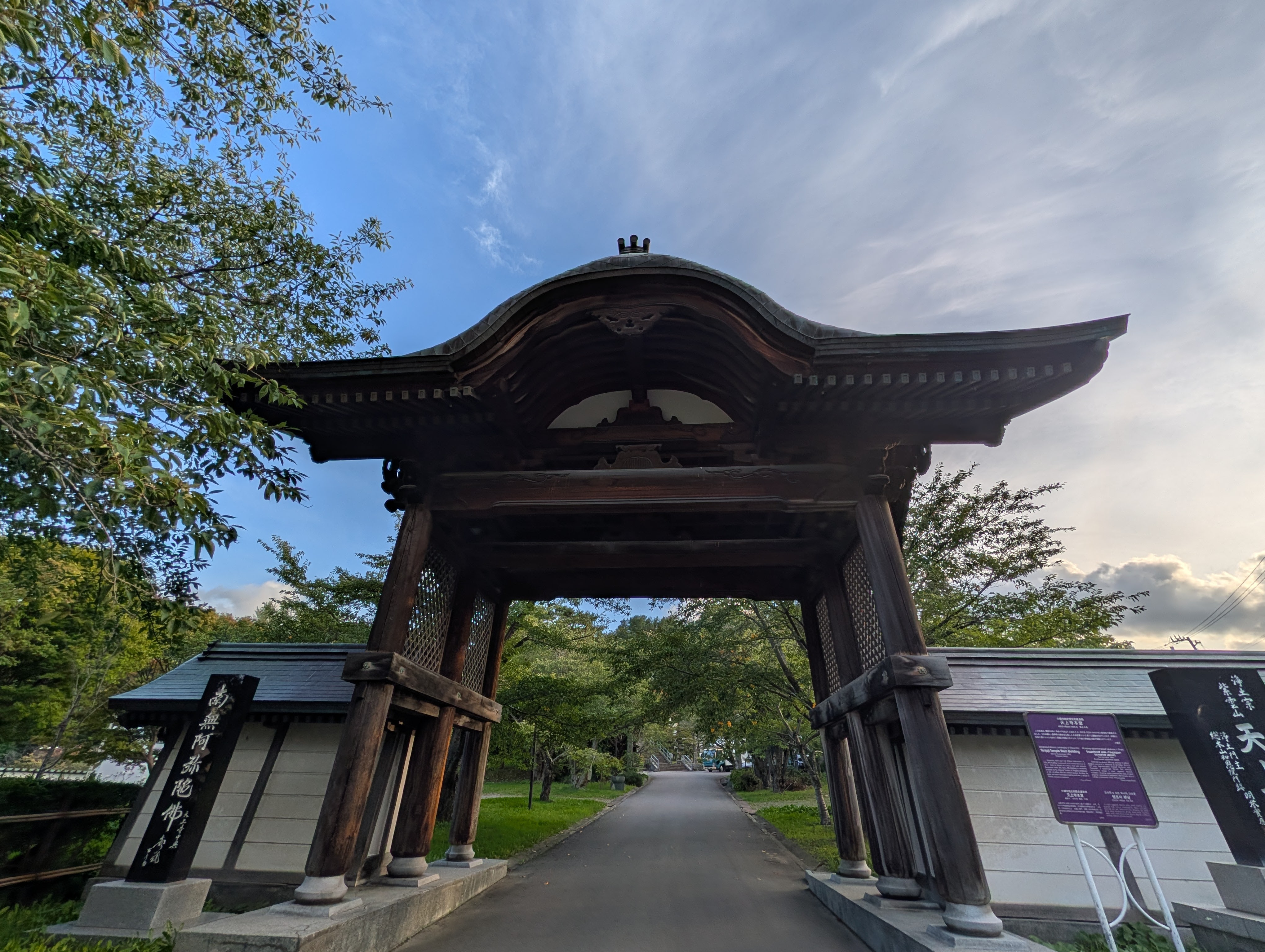

Before kicking off this post, I want to place a small asterisk on my last post about reading the trash schedule.
Despite my poking fun at it, the City of Otaru’s official government website is genuinely one of the best municipal websites I’ve ever used. It’s filled with exactly the kind of information that everyone—both domestic and foreign—needs to navigate daily life: language services, trash schedules, municipal happenings, taxes, social welfare, doctors, emergency services, poison control. Everything is there. It’s outstanding in every regard and should be a template for every other government website in the world. Hats off to the City of Otaru and whoever is running that site.
Where the trash schedule joke came in wasn’t from a failure on their end, but from mine—as someone looking in from outside the culture. I eventually figured it all out (mostly), and that’s really the point. When you’re new somewhere, some things won’t be intuitive. It’s okay to pause, laugh, and recognize the absurdity of your own misunderstanding.
And as someone who has spent time trying to convey complicated information in ways idiots can understand, I feel the pain that went into that document. Any misunderstandings were mine, and mine alone, not the creator’s. In other words, I’m the idiot the schedule was written for—and I excelled in that role.
Now, on with the post.
Getting Ready for Winter
I don’t remember exactly when it came up, but during one of our dinner conversations, I mentioned to Bob that we needed to figure out how to get kerosene and have someone look over the heater to make sure it was ready for winter. Without hesitation, Bob offered to connect us with his kerosene guy and said he’d make an introduction.
That was a huge relief.
A few days later, Bob and our soon-to-be kerosene supplier came over to the house. We talked at length about heating Japanese homes, and after a brief introduction, he asked if he could inspect everything. He turned on the heater and looked over the bath water heater, recommending both be replaced because they were, in his words, ancient.
We agreed to leave the bathtub heater alone for the time being, but approved replacing the main heater. He then stepped outside, looked at the kerosene tank, and pointed at the filter on the bottom.
It was black.
The tank itself was beginning to rust, and he explained it was well past its service life and should be replaced as well.
This wasn’t a surprise. Early on, when we were mapping out worst-case scenarios, we assumed we’d be replacing aging appliances as a matter of safety. We were moving into a home that had been part of a culture we didn’t fully understand, previously owned by an elderly woman who, if I had to guess, likely built the house herself or at least lived through several expansions of it.
We planned accordingly for these replacements.
We approved the work order, told him there was no rush—after all, it was early October and we wouldn’t be back until December—and exchanged contact information. Over the next month, we made payments for the new equipment and installation. I can say without hesitation that we’d recommend our kerosene guy and his company, hands down.
With that handled, we thanked Bob for his help and the introduction. He bowed out and went on with his day, just as Joy and I continued with ours.
Closing the House

By this point, we only had a few days left before we needed to pack up and head back to the U.S., so we decided it was time to see a bit more of Hokkaido beyond Otaru and start making our way toward the airport.
If we learned anything from the trip in, it was that we should be prepared to expect the unexpected and that arriving early is very much in our best interests. After all, we don’t know what we don’t know, and what we do know is that what we don’t know is a far greater concern than what we know that we know.
Joy, having fully embraced her role as trip planner, jumped on the task immediately, while I booked our hotel—an extra-fancy spot connected directly to New Chitose Airport. We figured that if we were going to call this a vacation, we might as well go all in and live the last few days in unapologetic decadence.
Joy’s plan included a day trip south to Tomakomai to see the port and do a little shopping at a store she’d found online—a gentle way to stretch the trip before heading home.
A Quiet Goodbye to Mogami
That night, we moved quietly through the house, picking things up and closing it down for the next few months. At the time, it didn’t feel particularly momentous—just necessary. Until we found a way to make the move permanent, this was simply part of the rhythm.
Even so, knowing it was coming didn’t make it any easier.
The next morning, we said goodbye to Otaru and our little house in Mogami, tossed our perishable trash on the way down the hill (fingers crossed we got it right), and locked up for the last time.
All three of us—Joy, me, and the house—felt it.
We held back tears as we stepped outside and walked downhill, gravel crunching underfoot. We said goodbye to Mama-San, thanked the house, and let the moment pass quietly.
None of our neighbors were out. There was no send-off. No production.
Yet somehow, it felt distinctly Japanese—sad but dignified. Head held high. Proud of what had been done, humble in how it was carried. A pause, and nothing more.
Familiar Faces
I’d hoped to see Kyousuke-San before we left, but that wasn’t in the cards. Since our first meeting, he’d warmed to us—still reserved, still stoic—but clearly pleased to know we wanted to be part of the community. He also knew I’d be back in December, which is when I suspected we’d either truly cement our place here—or flame out spectacularly.
We boarded the bus and wound our way down to Otaru Station, seeing the last of the town we wouldn’t see again until winter. Flowers lined the streets, the grass was still green, and the Sea of Japan sat calm and wide.
I watched our fellow passengers live their lives. Some whispered. Some stared out the windows. Others scrolled through their phones. And at that moment, I realized I was going to miss them.
In the short time we’d been there, it felt like we’d become part of the place—and that the place had accepted us as part of them, not just tourists passing through. I recognized one or two faces. We nodded to each other in quiet recognition, as familiar people who share a regular commute do.
I was already planning my return.
At the station, we bowed to the bus driver, thanked him, bought reserved seats to New Chitose Airport, and boarded the train. Once seated, we watched the world slide gently by.
Gone South

It felt like a lifetime ago that we’d first tried to board a train here. Since then, we’d grown in ways we never expected, made friends, and immersed ourselves in a culture halfway across the world. We did it with humility, a few tears, and a learning curve that, while steep, proved manageable.
The daylight revealed a landscape we hadn’t seen before: mountains, tunnels, and ocean unfolding together. The train hugged the coastline, in between the rugged mountains and the deep blue Sea of Japan. I joked it felt oddly familiar—like if the Appalachian Mountains and the Pacific Ocean had a love child, it might look like Hokkaido.
This is a special place. One we weren’t fully prepared for. And now that we know it, it’s hard not to feel like we were meant to find it, and the pull to always return.
After arriving at New Chitose, we set out to find our hotel.
On paper, it was simple: get off the train, enter the airport, follow the signs to the international terminal where the hotel lived.
On paper.
In practice, we wandered. We got lost, asked for directions, rode escalators up and down, took wrong turns, and eventually discovered we hadn’t gone far enough—or up enough.
But we arrived.
Neither of us was prepared for the hotel lobby. Marble, dark granite, plush seating, attentive concierges. It was a hedonist’s dream, and we hadn’t even reached the room.
Check-in, elevator, door open.
Paradise.
The room, the bed, the bathroom—everything—was luxury distilled. Our hearts had been heavy leaving Otaru, but here, they began to lighten. In hindsight, this was exactly the right decision.
Tomorrow we’ll head south to Tomakomai and savor our last full day in Japan.
Tonight, though, we live absurdly well above our pay station and enjoy every minute of it.

Leave a Reply